


Rolls-Royce Eyes India as Third ‘Home Market’, Bets Big on AMCA Jet Engine and Defence Manufacturing Push
Rolls-Royce eyes India as third ‘home market’

British aero-engine major Rolls-Royce has signalled a major strategic shift by declaring its intent to make India its third “home market” outside the UK, underlining plans for significant investments and deeper industrial integration across defence, aerospace, and advanced engineering domains.
In a clear endorsement of India’s defence manufacturing ambitions, Rolls-Royce India Executive Vice President Sashi Mukundan said the company is planning a “big investment” in the country, with the development of a next-generation jet engine in India to power the Advanced Medium Combat Aircraft (AMCA) programme emerging as a top priority.
How has India become an attractive, long-term strategic base?
Mukundan said India’s scale, policy clarity, and sustained push towards indigenisation have made it an attractive long-term strategic base for the company. Besides the UK, Rolls-Royce currently treats the US and Germany as its home markets due to its extensive manufacturing and engineering footprint in those countries.
“We want to do everything across the field in India, not just defence,” Mukundan said, adding that the ambition spans jet engines, naval propulsion, land systems, manufacturing, and advanced engineering skills—areas that closely align with India’s own priorities.
Why is the AMCA engine at the core of Rolls-Royce’s India push?
At the heart of Rolls-Royce’s India strategy is the proposed collaboration on a next-generation engine for the AMCA, India’s fifth-generation stealth fighter being developed by the Defence Research and Development Organisation (DRDO) and Hindustan Aeronautics Ltd (HAL).
Mukundan said extensive discussions are underway, stressing that Rolls-Royce has the capability and experience to support India’s requirement for high-thrust, next-generation combat engines. He added that all engine design work could be carried out in India, with technology transfer and joint ownership of new intellectual property.
“Once you own design IP, you have strategic control,” he said, calling engine development the most critical bottleneck in India’s combat aircraft ecosystem.
What naval and land systems synergies does Rolls-Royce want to achieve?
Beyond fighter jets, Rolls-Royce sees significant opportunity in India’s naval modernisation, particularly in electric and hybrid propulsion systems. Mukundan highlighted that Rolls-Royce is among the few global engine makers capable of “marinising” aero engines, adapting aircraft engine cores for naval propulsion.
This capability, he said, could allow India to develop a shared supply chain for both aero engines and marine gas turbines, making indigenous naval propulsion economically viable despite lower volumes.
The company is also set to firm up two memorandums of understanding with Indian defence public sector undertakings, one for manufacturing engines for the Arjun main battle tank and another for engines for future-ready combat vehicles, signalling a broader footprint across land systems.
What are Rolls-Royce’s plans for big investment, bigger ecosystem impact?
While declining to put a number on the investment, Mukundan said it would be “big enough that people will notice it,” with the real value lying in the creation of a full-spectrum industrial ecosystem rather than just standalone facilities.
The comments echo remarks made by Rolls-Royce CEO Tufan Erginbilgic, who told Prime Minister Narendra Modi in October that India would be “very critical” for the company’s future growth.
How does Rolls-Royce’s global engine pedigree help?
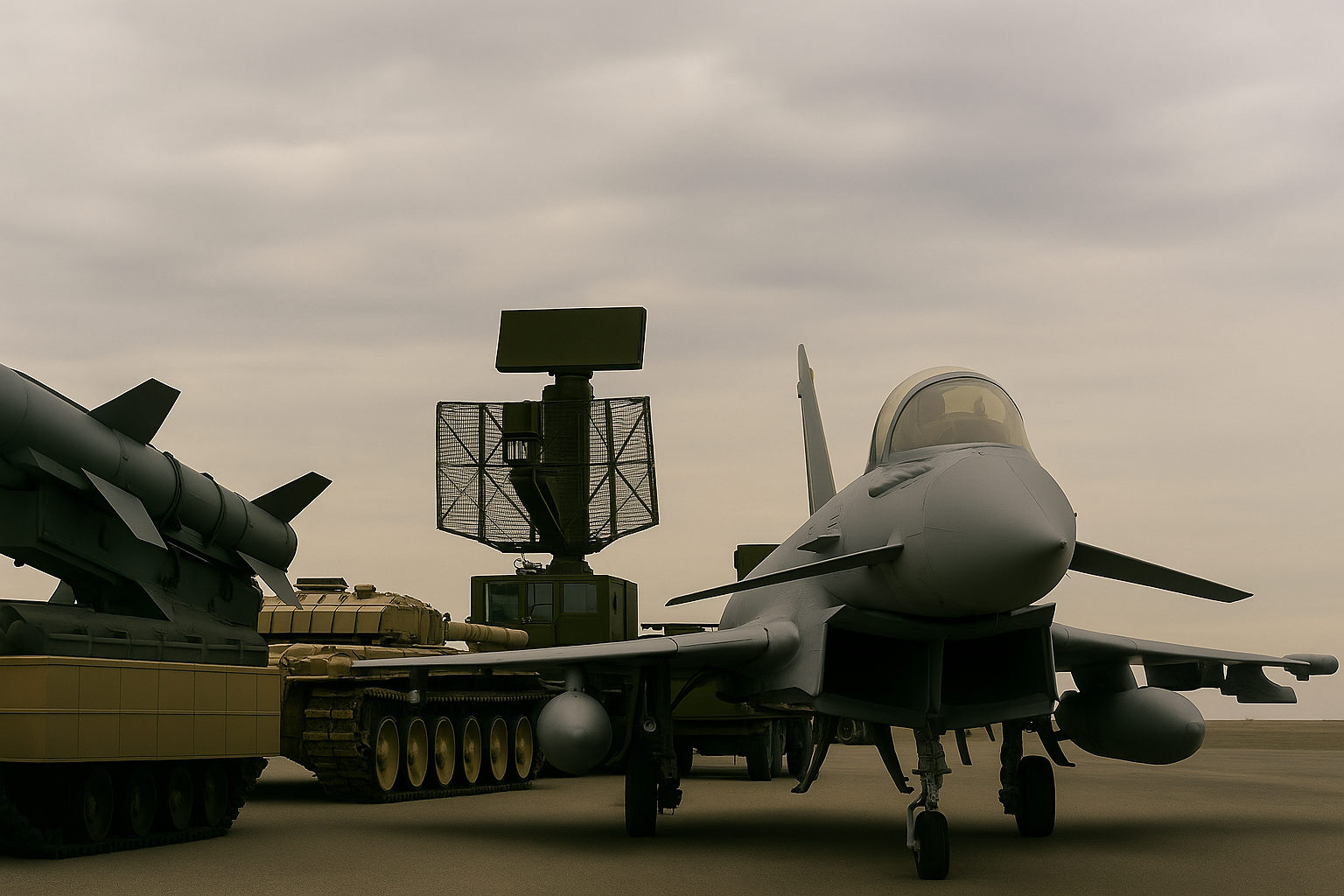
Mukundan underscored Rolls-Royce’s credentials as a combat engine manufacturer, noting its role in powering the Eurofighter Typhoon with the EJ200 engine and leading the UK-Japan-Italy Global Combat Aircraft Programme for a sixth-generation fighter.
He also pointed to the company’s joint work with GE Aviation on the F136 engine for the F-35 programme as evidence of experience in thrust classes relevant to India’s future requirements.
How does Rolls-Royce view India as a strategic home?
The Rolls-Royce executive struck an optimistic note on India’s long-term trajectory, citing the government’s visible focus on building indigenous capability across air, land, and naval domains.
“India is one of the few places where all the pieces genuinely fit together,” Mukundan said. “For Rolls-Royce, that makes India not just an important market, but a long-term strategic home.”
As India pushes to close critical capability gaps in aero engines and propulsion systems, Rolls-Royce’s pitch positions it as a key contender in one of the country’s most strategically sensitive defence programmes.