Afghanistan, Pakistan Border Tensions Flare Again As Fragile Ceasefire Breached Amid Istanbul Peace Talks
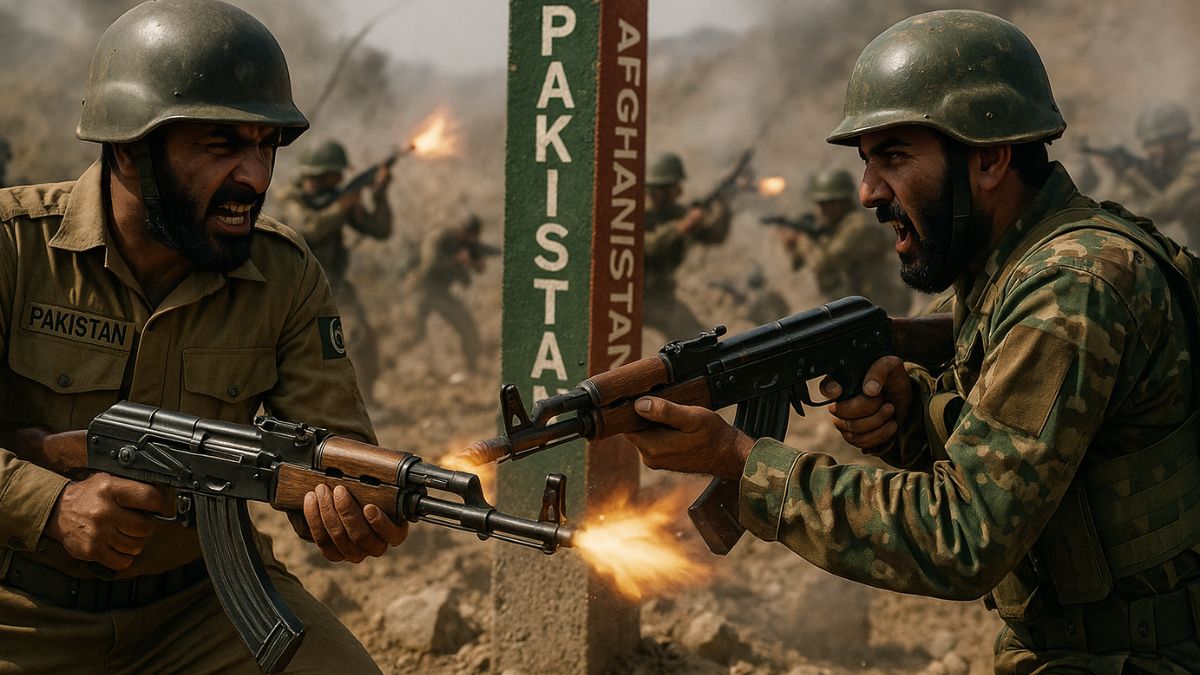
Pakistan and the Afghan Taliban have held two rounds of talks, first in Doha and later in Istanbul. Image courtesy: AI-generated picture via Sora

Fresh tensions erupted along the Pakistan–Afghanistan border on Thursday (November 6, 2025), when troops from both sides briefly exchanged gunfire near Spin Boldak, a key Afghan border town in Kandahar province. The exchange occurred even as peace talks resumed in Istanbul, aimed at reinforcing the October 19 ceasefire signed in Doha following last month’s deadly border clashes.
While there were no casualties reported, both nations traded blame for initiating the hostilities. Military officials on either side later confirmed that they remain committed to dialogue and maintaining the ceasefire.
According to the Afghan military, Pakistan used light and heavy weapons and targeted civilian areas. News agency AFP reported, citing a source as saying, that they have not retaliated yet, out of respect for the ongoing negotiations in Istanbul. Pakistan, however, denied the accusations, saying that “firing was initiated from the Afghan side”.
“We strongly reject claims circulated by the Afghan side regarding today’s incident at the Pak-Afghan border at Chaman. Firing was initiated from the Afghan side, to which our security forces responded immediately in a measured and responsible manner,” Pakistan’s information ministry said on X.
How did the situation escalate between Pakistan and Afghanistan?
Tensions between Islamabad and Kabul have been building for weeks. The latest flare-up follows a series of deadly confrontations in October 2025, when Pakistani airstrikes on Kabul and other Afghan locations targeted the leadership of the Tehrik-i-Taliban Pakistan (TTP), a militant group long accused of staging attacks inside Pakistan from Afghan soil.
In retaliation, Taliban fighters attacked Pakistani border posts, triggering some of the worst cross-border violence since 2021, when the Taliban seized control of Afghanistan. The clashes left dozens dead and forced the closure of key trade routes between the two nations.
What’s at stake in the Istanbul peace talks?
The Istanbul talks represent the second attempt in weeks to stabilise relations after the October ceasefire. Pakistan’s delegation, led by Lt Gen Asim Malik, head of the country’s military intelligence, is focused on a “one-point agenda”, which is pressing Kabul to curb the TTP’s cross-border attacks.
On the Afghan side, negotiations are being led by intelligence chief Abdul Haq Wasiq, under the supervision of Taliban spokesperson Zabihullah Mujahid, who reaffirmed Kabul’s commitment to “regional peace and dialogue.”
However, the talks remain gridlocked over Pakistan’s insistence that the Taliban dismantle TTP safe havens, a claim Kabul strongly denies, saying it has no control over the group’s actions.
Why have Pakistan–Taliban relations soured?
Despite decades of cooperation, relations between Islamabad and the Taliban have deteriorated sharply since the latter’s return to power. Pakistan, once seen as a key backer of the Taliban, now accuses the group of harbouring militants who target Pakistani security forces.
Defence Minister Khawaja Asif said on Wednesday (November 5, 2025) that Pakistan is pursuing a diplomatic path, hoping that “wisdom prevails and peace is restored in the region,” but warned that continued cross-border attacks could strain ties further.
Pakistan-Afghanistan ceasefire: Is it still holding?
While Thursday’s border skirmish briefly violated the ceasefire, both sides quickly pulled back, reaffirming their commitment to restraint as Istanbul negotiations continue. However, fighting between the Pakistani military and the TTP has persisted, with multiple casualties reported in Pakistan’s tribal districts over recent weeks.
The border remains closed to trade, and observers warn that without a concrete deal on militant control and intelligence cooperation, the fragile peace could unravel.
The renewed exchanges highlight the volatile nature of the Pakistan–Afghanistan frontier, a stretch of more than 2,600 km often used by militants and smugglers.