
After PM’s Invitation To New Bangladesh PM, EAM Jaishankar Invites Counterpart Khalilur Rahman To Rebuild Ties
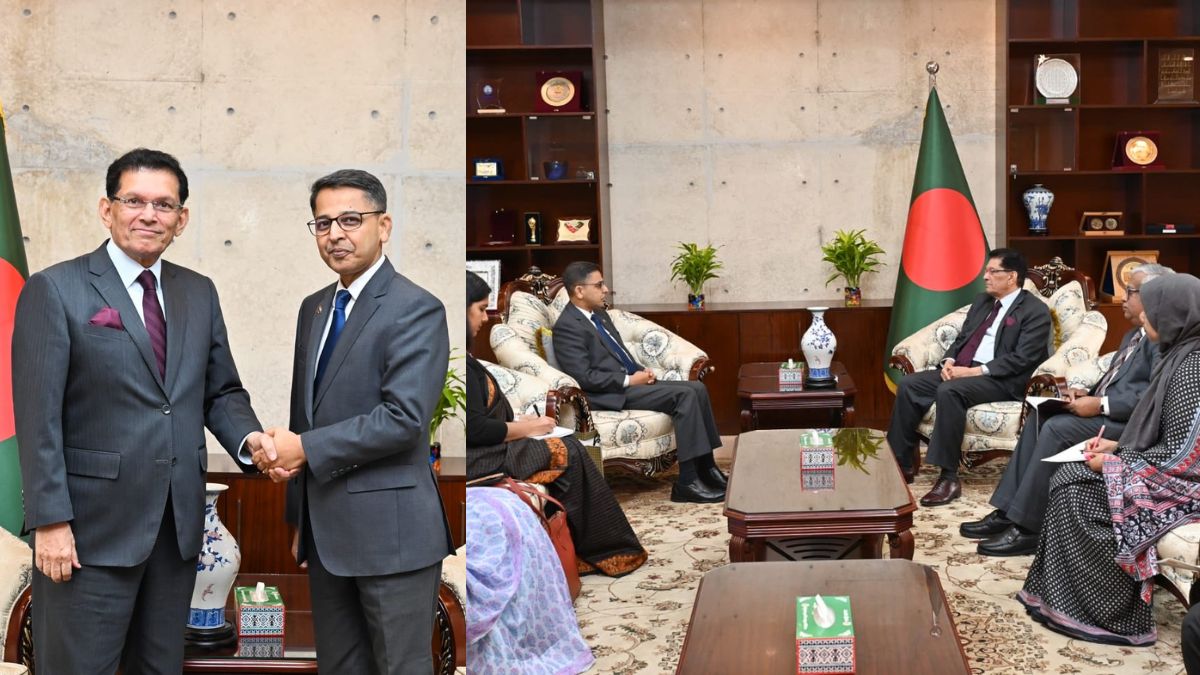
Verma expressed the Indian government’s “readiness to work closely with the new government of Bangladesh”. Image courtesy: RNA

In a fresh signal of diplomatic recalibration, Indian High Commissioner Pranay Verma on Sunday (February 22, 2026) met Bangladesh’s newly appointed Foreign Minister Dr. Khalilur Rahman in Dhaka, extending an invitation from External Affairs Minister S. Jaishankar to visit New Delhi at the earliest.
The outreach comes just a few days after Prime Minister Narendra Modi invited Bangladesh’s new Prime Minister Tarique Rahman to visit India, underscoring New Delhi’s intent to rebuild relations following months of strain during Bangladesh’s interim administration.
Fresh diplomatic push: Jaishankar’s invite and high-level engagement
Calling it a “courtesy meeting and an initial exchange of views,” Verma described the interaction as the first formal engagement with the new foreign minister and minister of state, Shama Obaid Islam, after the formation of the new government in Dhaka.
During the meeting, Verma reiterated India’s readiness to “work closely with the new government of Bangladesh to further advance bilateral cooperation.” He emphasised India’s desire to strengthen “people-centric cooperation in all domains” in a “positive, constructive and forward-looking manner.”
Bangladesh’s foreign ministry, in its readout, said Khalilur Rahman expressed Dhaka’s intent to build a “forward-looking and balanced partnership based on mutual interest for the benefit of the peoples of both countries.”
Both sides agreed to maintain regular and constructive engagement to reinforce bilateral ties.
From swearing-in to strategic messaging
India’s outreach began immediately after Bangladesh’s elections earlier this month. On February 13, PM Narendra Modi sent a congratulatory message to Tarique Rahman shortly after the results and later held a phone conversation with him.
A few days later on February 17, Lok Sabha Speaker Om Birla attended Rahman’s swearing-in ceremony in Dhaka, carrying a personal letter from PM Modi and reiterating India’s commitment to Bangladesh’s democratic and inclusive future. PM Modi formally invited Rahman to visit India at the earliest convenience.
Verma said these communications underline India’s commitment to supporting a “democratic, progressive and inclusive Bangladesh.”
The speed and sequencing of these engagements reflect New Delhi’s calibrated effort to stabilise a relationship that had dipped to one of its lowest points in decades under the interim government led by Muhammad Yunus.
Why is India keen to reset Bangladesh ties?
Tarique Rahman, leader of the Bangladesh Nationalist Party (BNP), assumed office amid significant domestic challenges marked by political instability, investor concerns and economic slowdown following the student-led uprising that toppled Sheikh Hasina’s government in August 2024.
New Delhi appears keen to ensure continuity in cooperation across trade, connectivity, security and regional diplomacy, particularly given Bangladesh’s strategic importance in India’s “Neighbourhood First” and Act East policies.
Khalilur Rahman’s inclusion as foreign minister is also noteworthy. A seasoned diplomat who previously served as National Security Adviser under the interim government, he played a key role in negotiating Bangladesh’s trade deal with the United States, signalling Dhaka’s emphasis on diversified global partnerships.
India-Bangladesh relations: A forward-looking partnership?
Despite recent turbulence, India and Bangladesh share deep historical, economic and cultural ties. Verma stressed that New Delhi seeks to build on these “historic ties” and expand multifaceted cooperation grounded in mutual benefit.
With both sides signalling openness to regular dialogue and high-level visits likely in the coming months, the early diplomatic choreography suggests that India is moving decisively to re-anchor its relationship with Dhaka under Tarique Rahman’s leadership.