Asim Munir Revives ‘Operation Sindoor’ Boast as US Report Exposes China’s Disinformation Drive
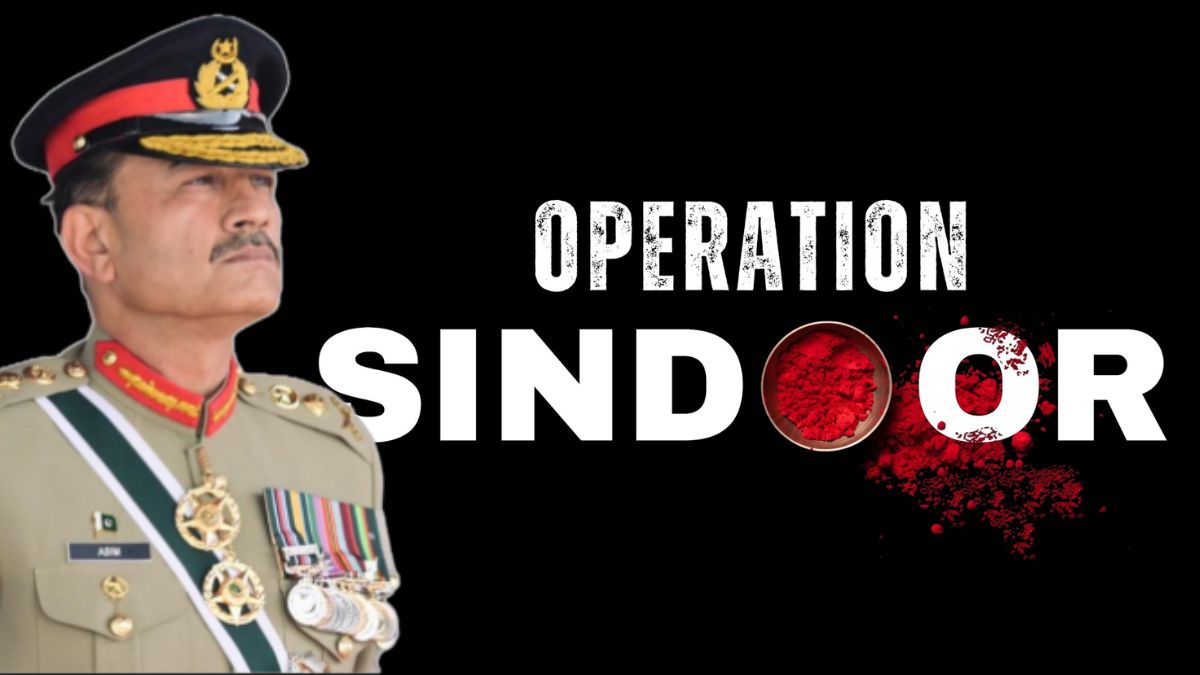
Pakistan's Field Marshal Asim Munir is clutching on to big boasts of victory during Operation Sindoor, despite undeniable proof of how much Pakistan suffered. Image courtesy: RNA

Pakistan’s powerful army chief and newly minted Field Marshal Asim Munir on Wednesday (November 26, 2025) reignited his rhetoric surrounding Operation Sindoor, claiming the Pakistan Army’s actions during the May 2025 conflict with India had “enhanced” the country’s global standing.
His remarks came just as a new US report revealed China’s sweeping disinformation campaign during the same clash, an operation conducted in close coordination with Pakistan’s military.
What did Munir say about Operation Sindoor?
Speaking at an event at the General Headquarters (GHQ) in Rawalpindi, Munir hailed the “professionalism, resolve and commitment” displayed by Pakistan’s forces during Marka-i-Haq, a term the military uses to describe the period between the April 22 Pahalgam terror attack and the May 10 ceasefire.
He claimed that the country had firmly “put itself on the world map” through its battlefield performance.
The comments echoed his earlier incendiary speeches that invoked religious divisions ahead of the Pahalgam attack, remarks widely seen in India as contributing to the escalation.
Munir doubled down on his narrative that Pakistan is “a nation of consequence” destined for a prominent global role, asserting that national unity would defeat the “nefarious designs” of its adversaries.
What credibility does Pakistan have in its claims?
His claims come despite Pakistan’s widely discredited depiction of the four-day conflict as a strategic triumph. India had launched targeted strikes on nine terror-linked locations inside Pakistan in retaliation for the Pahalgam attack, prompting a tense escalation.
Though the confrontation ended on May 10 following decisive Indian strikes on major Pakistani airbases, Islamabad promoted inflated claims of shooting down multiple Indian aircraft.
Munir’s prestige surged in the aftermath, leading to his elevation as Field Marshal and increasing influence within Pakistan’s civilian government. He even met US President Donald Trump days after the conflict in an attempt to bolster ties with Washington as Pakistan sought diplomatic relevance following Sindoor.
How was China’s disinformation operation unmasked?
Coinciding with Munir’s speech, the US–China Economic and Security Review Commission released its annual report to Congress, revealing that China orchestrated a coordinated online disinformation campaign during the India–Pakistan clash.
Conducted in partnership with Pakistani channels, the effort aimed to discredit France’s Rafale fighter jet and promote China’s own J-35 stealth aircraft in global markets.
The report states that Beijing deployed fake social media accounts to circulate AI-generated and video-game-sourced images, falsely presented as “debris” from Indian jets allegedly downed by Pakistan.
The objective was not only to weaken French defence exports but also to push Chinese platforms, so effectively, the report notes, that Indonesia briefly paused a Rafale procurement commitment.
What did the report expose about Pakistan’s claims?
The Commission further highlights Pakistan’s heavy reliance on Chinese systems and intelligence during the confrontation.
Indian officials have claimed that China provided “live inputs” on Indian troop positions, treating the conflict as a real-time testing ground for its own military capabilities. While Pakistan denied these assertions, China neither confirmed nor denied its involvement.
How did China use Operation Sindoor to push exports?
China also used the conflict as a marketing showcase, with Pakistan deploying Beijing’s HQ-9 air defences, PL-15 air-to-air missiles, and J-10 fighters in active combat for the first time.
Chinese embassies worldwide amplified Pakistan’s exaggerated claims of Rafale losses, claims that the US report dismissed as claims with no evidence.
As Munir seeks to frame Operation Sindoor as a symbol of Pakistan’s military strength, the US findings underscore a more complex picture, one defined less by battlefield success and more by information warfare, external dependency, and an increasingly entrenched China–Pakistan strategic axis.