
At UN, US-Iran Clash Over NPT Meet, India Urges Unimpeded Passage in Hormuz
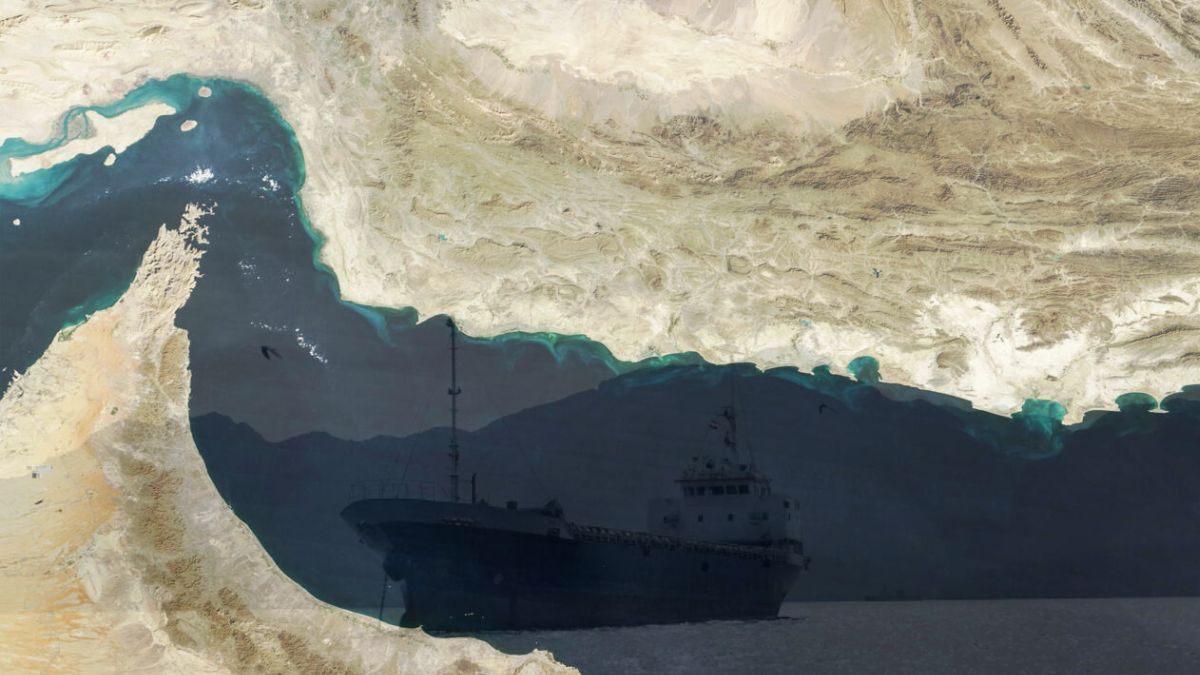
Strait of Hormuz. Image courtesy: RNA

At a UN meet on the Nuclear Non-Proliferation Treaty (NPT) on Monday (April 27, 2026), Iran and the US clashed over Tehran being elected as vice president, even as Washington claimed it was an “affront” to the NPT.
At the 11th Conference to Review NPT Implementation, Iran was elected one of the 34 vice presidents, with the meeting’s chair, Vietnam’s Ambassador to the UN, Do Hung Viet, noting that Tehran was picked by “the group of non-aligned and other states” for the post.
Soon after, US Bureau of Arms Control and Non-proliferation Assistant Secretary Christopher Yeaw told the conference that the election of Iran as vice president was an “affront” to the NPT.
Yeaw said it was “indisputable that Iran has long demonstrated its contempt for non-proliferation commitments” and refused to cooperate with the UN nuclear watchdog to resolve questions about its nuclear programme.
He called Iran’s election as conference vice president was “beyond shameful and an embarrassment to the conference’s credibility.”
Iran’s Ambassador to the International Atomic Energy Agency (IAEA), Reza Najafi, rejected the US accusations as “baseless and politically motivated.”
“It is indefensible that the US, as the only state ever to have used nuclear weapons, and the one that continues to expand and modernise its nuclear arsenal, seeks to position itself as an arbitrator of compliance,” Najafi said.
The clash between the US and Iran at the UN forum came amidst a stalled peace talks between the two nations, which included the Iranian nuclear programme curtailment, an issue Tehran wanted postponed to a later date.
US President Donald Trump has repeatedly maintained that Iran can never have a nuclear weapon and had begun the current West Asia war on February 28 after a failed talk earlier that month.
Iran has repeatedly maintained that its right to enriched uranium could not be compromised, as these were for the peaceful use of nuclear energy.
Meanwhile, India reiterated its position on ensuring the safety of maritime traffic and unimpeded passage for commercial ships through the Strait of Hormuz, which Iran has blockaded since the start of the West Asian war.
At the UN Security Council Open Debate on Monday (April 27) on ‘The Safety and Protection of Waterways in the Maritime Domain’, India’s Charge d’Affaires Yojna Patel reiterated India’s position.
Patel said the “freedom of navigation and global commerce through the Strait of Hormuz must be fully respected in accordance with international law and urges that safe and unimpeded maritime passage be restored at the earliest.”
The Indian diplomat said that India remains committed to a free, open, and rules-based maritime order anchored in the United Nations Convention on the Law of the Sea (UNCLOS), stressing that adherence to international law is essential for safeguarding global trade routes and ensuring freedom of navigation.
Highlighting the strategic importance of maritime corridors, she noted that disruptions in critical sea lanes have far-reaching consequences for global energy flows, trade, and humanitarian supply chains.
Patel expressed concern over recent attacks on commercial shipping in the Strait of Hormuz, calling them unacceptable and warning of risks to civilian seafarers, including Indian nationals who have lost their lives in such incidents.
“As a major trading nation, India strongly deplores the recent targeting of commercial shipping through the Strait of Hormuz and the endangerment of innocent civilian crew members,” she said.
“Such actions have resulted in the tragic loss of the precious lives of Indian seafarers and are unacceptable. India reiterates that freedom of navigation and global commerce through the Strait of Hormuz must be fully respected in accordance with international law and urges that safe and unimpeded maritime passage be restored at the earliest,” she added.
As part of its intervention, India outlined key priorities, including strengthening the safety of navigation, ensuring continuity of humanitarian supply chains, improving maritime situational awareness, and enhancing communication channels for seafarers.
“As a responsible maritime power, India has the honour of submitting certain recommendations to alleviate the situation and contribute to the safety of waterways and seafarers,” Patel said.