Crude Bomb Explosion In Dhaka Ahead of Tarique Rahman’s Return, 1 Killed
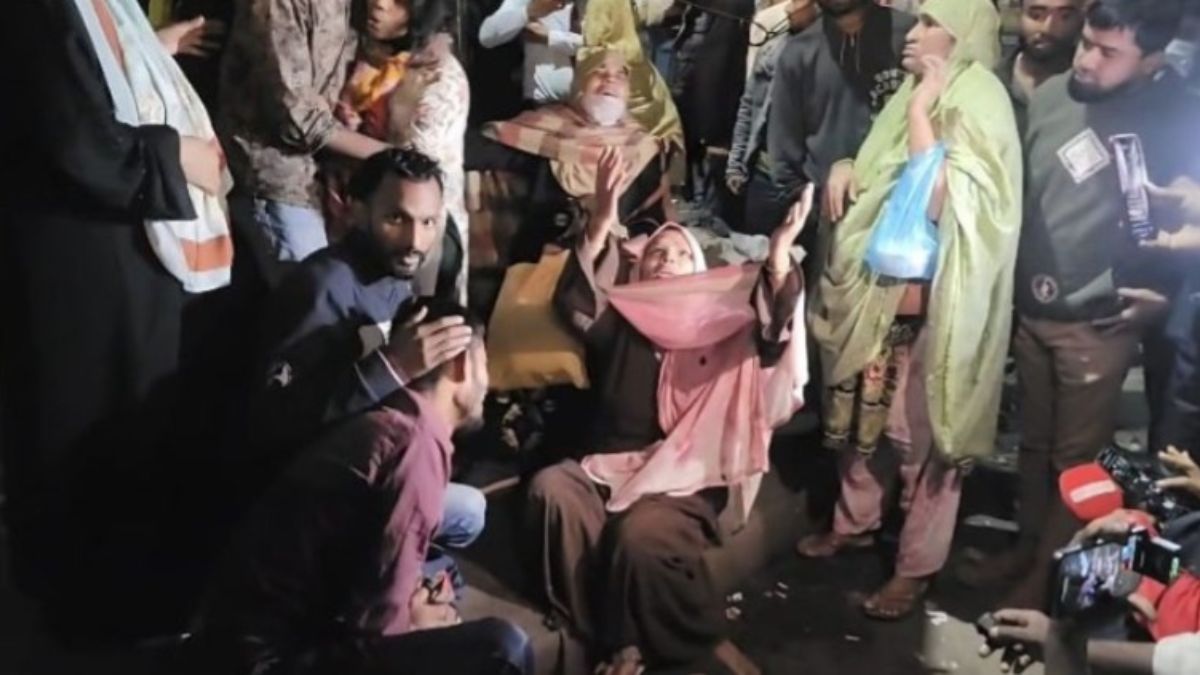
The incident happened around 7 pm; according to police, the bomb was thrown from the adjacent flyover. Image courtesy: X.com/@Samrat01896109

‘On the edge’ now seems to be very small term when talking about the recent events in Bangladesh, with one being a bigger shocker than the previous one! The country was pushed deeper into crisis on Christmas Eve (December 24, 2025) after a young man was killed in a crude bomb explosion in central Dhaka.
The blast occurred on Wednesday evening at the busy Moghbazar intersection, close to the Bangladesh Muktijoddha Sangsad Central Command, just as security was being tightened ahead of the return of exiled Bangladesh Nationalist Party (BNP) leader Tarique Rahman.
The latest development, which follows a series of deadlier incidents inviting international comments, only underscores how the country has remained on edge for weeks amid political uncertainty, street unrest and rising communal tensions.
Dhaka explosion: What happened at Moghbazar?
According to police, unidentified assailants hurled a crude bomb from the Moghbazar flyover at around 7:10 pm, causing it to land on the road below near the New Eskaton area under Hatirjheel Police Station. The improvised explosive device struck Saiful Siam, who was reportedly standing near a roadside tea stall, killing him on the spot.
The location is adjacent to the Assemblies of God (AG) Church, a densely populated and high-traffic zone of the capital. Inspector (Operations) Md Mohiuddin of Hatirjheel Police Station confirmed the details to The Daily Star, saying the attack appeared targeted but the motive remained unclear.
Why the timing is politically sensitive
The explosion comes at a volatile moment for Bangladesh’s fragile political landscape. Tarique Rahman, son of former president Ziaur Rahman and former prime minister Khaleda Zia, is set to return to Dhaka after 15 years in exile, with national elections barely a month away. His return is expected to reshape opposition politics even as his mother remains on life support.
Authorities had already placed Dhaka under heightened security, anticipating possible unrest linked to Rahman’s visit. The Christmas Eve bombing has intensified fears of deliberate attempts to destabilise the capital.
Weeks of unrest have primed the country for violence
The Moghbazar killing did not occur in isolation. Bangladesh has witnessed sustained unrest following the death of prominent student activist Sharif Osman Hadi, who succumbed to injuries in Singapore after an assassination attempt in Dhaka last week. His funeral was held on Saturday (December 20, 2025).
Hadi was a key figure in last year’s mass protests that culminated in the toppling of Sheikh Hasina’s government. His death sparked nationwide demonstrations, with interim leader Muhammad Yunus pledging justice and warning of “no leniency” for those responsible.
Communal flashpoints add to instability
Tensions were ignited further a few days back after Dipu Chandra Das, a young Hindu man from the minority community, was lynched by a mob in Mymensingh over alleged blasphemy, with his body later set on fire. The killing triggered widespread protests by factory workers, students and rights groups across Dhaka and other cities.
The mob violence coincided with outrage over Hadi’s death, creating a combustible mix of political anger, communal fear and public distrust.
Security concerns mount in the capital
With the Christmas Eve bombing, security agencies are facing growing pressure to contain violence in Dhaka, particularly around strategic locations and political flashpoints.
Police say investigations are underway to identify those behind the Moghbazar attack, while officials privately acknowledge fears that provocative acts could multiply as political developments unfold in the coming weeks.
As Bangladesh heads toward elections amid leadership transitions, unresolved political grievances and social fault lines, the killing of Saiful Siam has become another grim marker of a nation struggling to steady itself. The country is set to hold elections on February 12, 2026.