“I Don’t Need International Law”: Trump’s Maduro Abduction Sparks Global Alarm as World Warns of Return to Imperialism

Trump’s rejection of international law following the abduction of Venezuela’s president has sparked global alarm, reviving fears of a return to power-driven foreign policy and imperial overreach. Image courtesy: AI generated picture via DALL-E

United States President Donald Trump has triggered global outrage after openly dismissing international law, declaring that only his “own morality” constrains the aggressive foreign policy he is now pursuing: from Latin America to the Middle East and beyond.
His remarks come in the immediate aftermath of a dramatic US military operation in Venezuela that saw President Nicolas Maduro abducted from Caracas, an act critics across the world have condemned as a blatant violation of the United Nations Charter.
What did Trump say about his morality?
“I don’t need international law. I’m not looking to hurt people,” Trump told The New York Times, before adding that adherence to international law “depends on what your definition of international law is.”
The comments have intensified fears that Washington under Trump is abandoning the post–World War II rules-based international order in favor of raw military power.
Those concerns deepened after Saturday’s (January 3, 2026) pre-dawn US attack on Venezuela, when explosions were reported across Caracas and at key Venezuelan military bases.
US troops ultimately seized Maduro and removed him from office, prompting legal experts to argue that the operation violated international prohibitions on the “threat or use of force against the territorial integrity or political independence of any state.”
How does Trump want to “run” Venezuela?
In the immediate aftermath, Trump claimed the US would effectively “run” Venezuela and exploit its vast oil reserves, even as his administration publicly stated it would cooperate with interim President Delcy Rodriguez.
Behind the scenes, however, the White House made clear it would dictate policy to the interim government, repeatedly threatening a second wave of military action if US demands were ignored.
“If she doesn’t do what’s right, she is going to pay a very big price, probably bigger than Maduro,” Trump warned in an interview with The Atlantic.
How has Trump been picking fights with all nations?
Venezuela is not the only flashpoint. Earlier this week, Trump suggested that Colombia’s left-wing President Gustavo Petro could face US military action, while also reviving his controversial push to acquire Greenland from Denmark.
In June, Trump joined Israel’s war against Iran, ordering strikes on Iran’s three main nuclear facilities, another move widely criticised as lacking legal justification.
Trump’s inner circle has offered little reassurance. Senior aide Stephen Miller openly criticised the postwar international system, declaring that the US would now “unapologetically” use military force to secure its interests, particularly in the Western Hemisphere. “We’re a superpower, and under President Trump, we are going to conduct ourselves as a superpower,” Miller said.
How has the world reacted to Trump’s comments?
International reactions have been swift and alarmed. Legal scholars and UN officials warn that Washington’s rejection of international law could unleash global instability.
Margaret Satterthwaite, the UN special rapporteur on the independence of judges and lawyers, described such rhetoric as “extremely dangerous,” cautioning that the world may be sliding back into an “age of imperialism.”
She warned that undermining international law could embolden rival powers. “We’re worse off if we don’t insist on the international law that does exist,” Satterthwaite said, noting that the erosion of legal norms risks accelerating global conflict.
Why do experts feel the “might is right” approach is flawed?
Yusra Suedi, an assistant professor of international law at the University of Manchester, echoed those concerns, warning that a “might is right” approach signals permission for other states to act similarly.
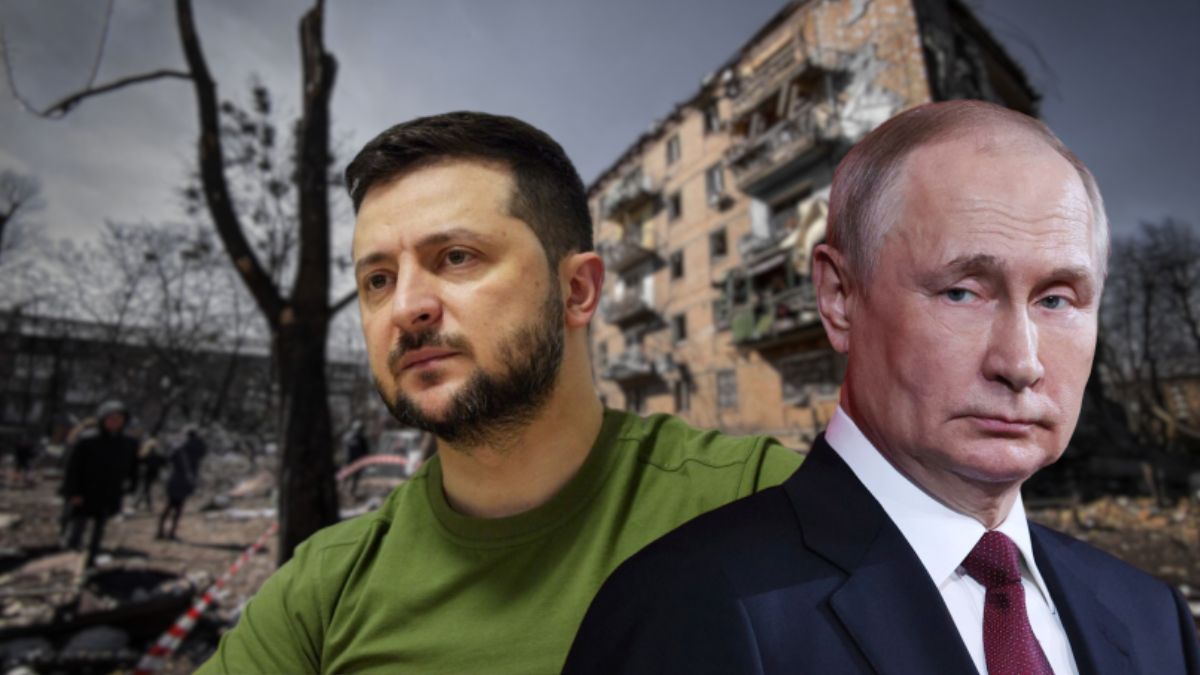
She pointed to China’s interest in Taiwan and Russia’s actions in Ukraine as examples of how US behavior could set dangerous precedents.
Historians also see familiar patterns. Ian Hurd, a political science professor at Northwestern University, noted that Latin America has endured more than a century of US interventions — from Panama and Haiti to Nicaragua and Chile — often resulting in long-term instability and human rights abuses.
Trump’s actions in Venezuela, Hurd said, fit squarely within that troubled legacy.
“In every one of those cases, the US came to regret its choice to intervene,” Hurd warned. “These never work well.”
As Trump insists that his personal moral compass is sufficient, critics argue the cost may be a world where power replaces law, and where global chaos becomes the new norm.