
Divided By Tensions, United By US Tariffs! Carney To Visit India Soon As Canada Looks To Cut Dependence on US
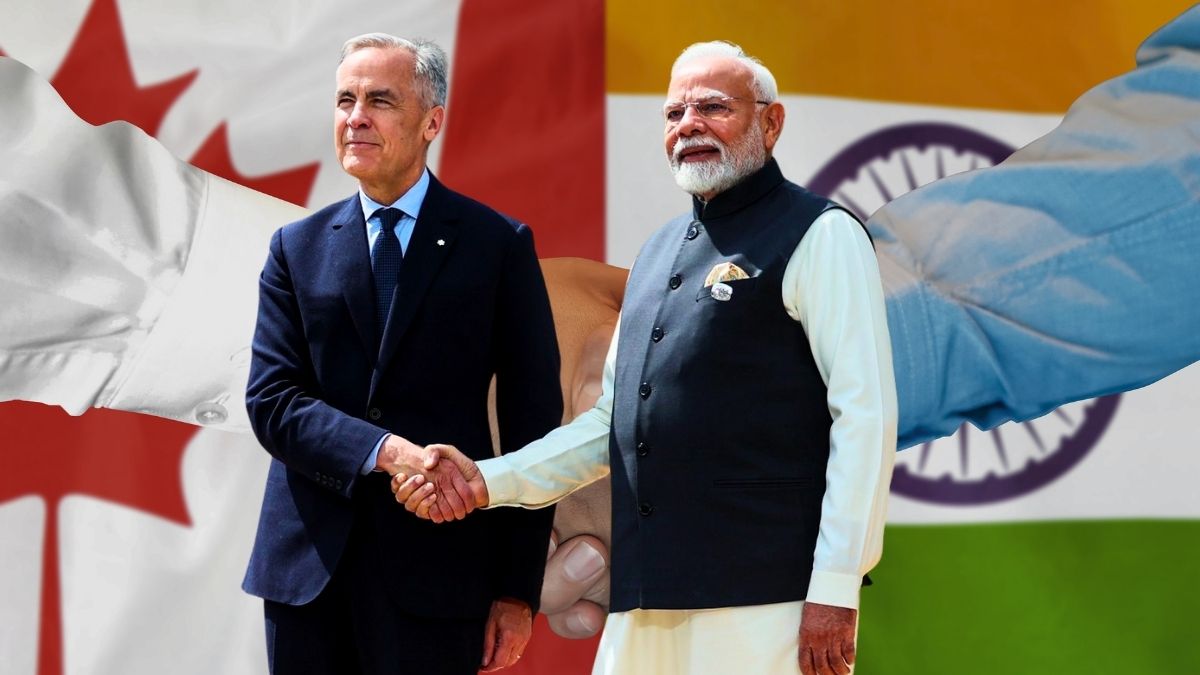
Carney has been in office less than a year, succeeding Justin Trudeau, who was prime minister for nearly a decade. Image courtesy: RNA

Whether or not US President US President Donald Trump’s tariffs achieve something, they do seem to have united India and Canada. Both New Delhi and Ottawa are facing high tariffs imposed by Trump on their exports – 50% tariffs on India, 25% of which is due to New Delhi’s purchase of Russian Oil, and 35% tariffs on Canada.
This is why Canada is seeking to redraw its global trade map, and India is emerging as a key beneficiary. Prime Minister Mark Carney has announced that Ottawa plans to double its non-US exports over the next decade, a strategic pivot driven by rising protectionism and steep tariffs imposed by the United States.
“In a shifting global trade landscape, Canada’s new government is focused on what we can control,” Carney said in a post on X, underlining the urgency of finding new and reliable economic partners.
Canadian PM’s India visit: What to expect?
In a significant diplomatic signal, Canadian Prime Minister Mark Carney is expected to visit India in the coming weeks, according to Indian High Commissioner to Canada Dinesh Patnaik. Speaking to CBC’s Power & Politics, Patnaik said the visit would focus on expanding bilateral trade and restoring momentum after more than two years of strained ties.
Worth noting here is that Carney’s India visit would come after his trip to China, marking the visit such visit by a Canadian leader in nearly a decade. With this visit, the Canadian PM is looking to rebuild the country’s fractured relations with the world’s second-largest economy, and reduce Canada’s dependence on the United States.
His India visit is likely to take place after the Centre presents its Union Budget 2027 on February 1, 2026, with diplomats on both sides working to revive initiatives stalled during what Patnaik described as a “slight gap” in relations. “Trust is back in the system,” the Indian envoy said, indicating a clear reset under Canada’s new leadership.
Why Carney’s visit could be a big opportunity for India
For India, Canada’s recalibration presents a strategic economic opening. As one of the world’s fastest-growing major economies, India offers Canada access to a vast consumer market, expanding manufacturing base, and deepening supply chains in sectors ranging from energy and agriculture to technology and critical minerals.
Suggesting that Canada is focused on building a more competitive, sustainable and independent economy, Carney stated that they are forging new partnerships around the world to transform their economy from one that has been reliant on a single trade partner.
The two sides have already agreed to begin negotiations on a high-ambition Comprehensive Economic Partnership Agreement (CEPA), aimed at raising bilateral trade to $50 billion by 2030. If concluded, the deal could significantly boost Indian exports, investment flows, and job creation.
From Khalistan tensions to cautious re-engagement
India–Canada ties hit a breaker in 2023 after New Delhi raised concerns over Canada’s perceived leniency toward Khalistani separatist elements, following allegations by then prime minister Justin Trudeau that Indian agents were involved in the killing of Hardeep Singh Nijjar, a Canada-based separatist designated as a terrorist by India.
India has consistently rejected the allegations. “We have always said it’s preposterous, absurd. It’s something we don’t do,” Patnaik reiterated, stressing that there is “no case against the Government of India.”
Under Carney, Ottawa’s tone appears to be shifting. “There’s a new prime minister who is changing the way Canada behaves,” Patnaik said, suggesting a more pragmatic approach focused on economic and strategic interests.
India-Canada working towards restoring relations
Following the return of high commissioners in August 2025, India and Canada agreed to increase diplomatic staffing to meet rising consular demand, strengthen people-to-people ties, support reciprocal knowledge transfer, and deepen law enforcement dialogue. Moreover, Carney has welcomed progress in these areas, signaling political backing for a broader reset.
As global trade fragments under geopolitical pressure, Canada’s outreach to India underscores New Delhi’s growing importance as a trusted economic and strategic partner. For India, Carney’s visit could mark not just a diplomatic thaw, but a major geopolitical and trade win.
Meanwhile, Carney will be in China until Saturday, and then visit Qatar before attending the annual meeting of the World Economic Forum in Davos, Switzerland, next week.