


Israel Hits Lebanon After Ceasefire, US to Resume Strikes If Talks Fail
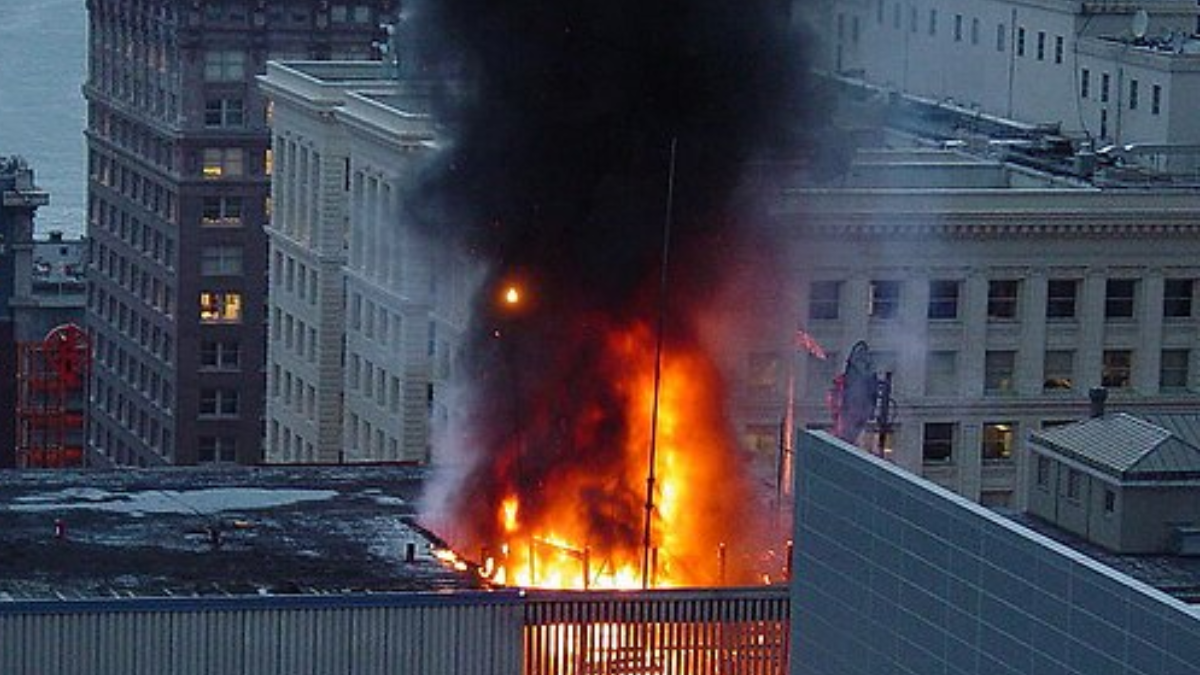
Strait of Hormuz Tensions. Image courtesy: Wikimedia

A day after the US-Israel combine, and Iran agreed to a two-week ceasefire, Tel Aviv continued to bomb Lebanon on Wednesday (April 8, 2026), even as Washington said it would resume military operations if its negotiations with Tehran failed.
Iran, on its part, protested the attacks on Lebanon, while insisting that the negotiations, to be held in Islamabad on Friday (April 10), would be on its 10-point agenda put forward ahead of the ceasefire announcement on Tuesday (April 7).
Israel continued its military campaign in Lebanon, hitting commercial and residential areas in central Beirut without warning, insisting that operations against Hezbollah were not part of the ceasefire agreement.
Lebanon said at least 112 people were dead and hundreds wounded in the Israeli attacks, one of the deadliest in the latest round of war.
US President Donald Trump also endorsed Israel’s position that the Lebanon operations were not part of the two-week ceasefire, indicating that Iran-backed Hezbollah wasn’t a party to the agreement.
“That’s a separate skirmish,” Trump said when asked about the Israeli operations in Lebanon, though Pakistan, which was mediating the negotiations, said it was included in the ceasefire.
The ceasefire was announced to facilitate talks in Islamabad based on the 15-point agenda proposed by the US and the 10-point plan that came from Iran.
State-run media noted in a report that Iran would accept the conclusion of the 37-day war on the 10-point terms of reference it had released earlier, and communicated to Trump through Islamabad.
It published the Iranian agenda, some of which were previously not acceptable to the US. The 10-point plan included lifting all primary and secondary sanctions on Iran, continued control of the Strait of Hormuz by Tehran, US military withdrawal from West Asia, an end to attacks on Iran and its allies, release of frozen Iranian assets, and a UNSC resolution on the peace plan to make it binding on all stakeholders.
However, one of the points, which was part of the Farzi statement, did not find a place in the English version: Acceptance of the Iranian right to uranium enrichment.
Meanwhile, a top US General said on Wednesday (April 8) that the American troops were ready to resume military operations against Iran if the negotiations for a lasting peace failed.
“We hope that Iran chooses a lasting peace. A ceasefire is a pause, and the joint force remains ready, if ordered or called upon, to resume combat operations — with the same speed and precision as we’ve demonstrated over the last 38 days,” General Dan Caine said at a Pentagon media interaction.
The continued military operations against Lebanon, the difficulty in coming to terms with the US and Iranian agenda for negotiations, and the talk of resuming the war do not bode well for West Asian peace.
In all likelihood, the war would resume even before the Islamabad-negotiated peace talks could end.