

After Declaring Open War, Pakistan Gives Tough Warning To Taliban: Asim Munir Says Terror Support Must End
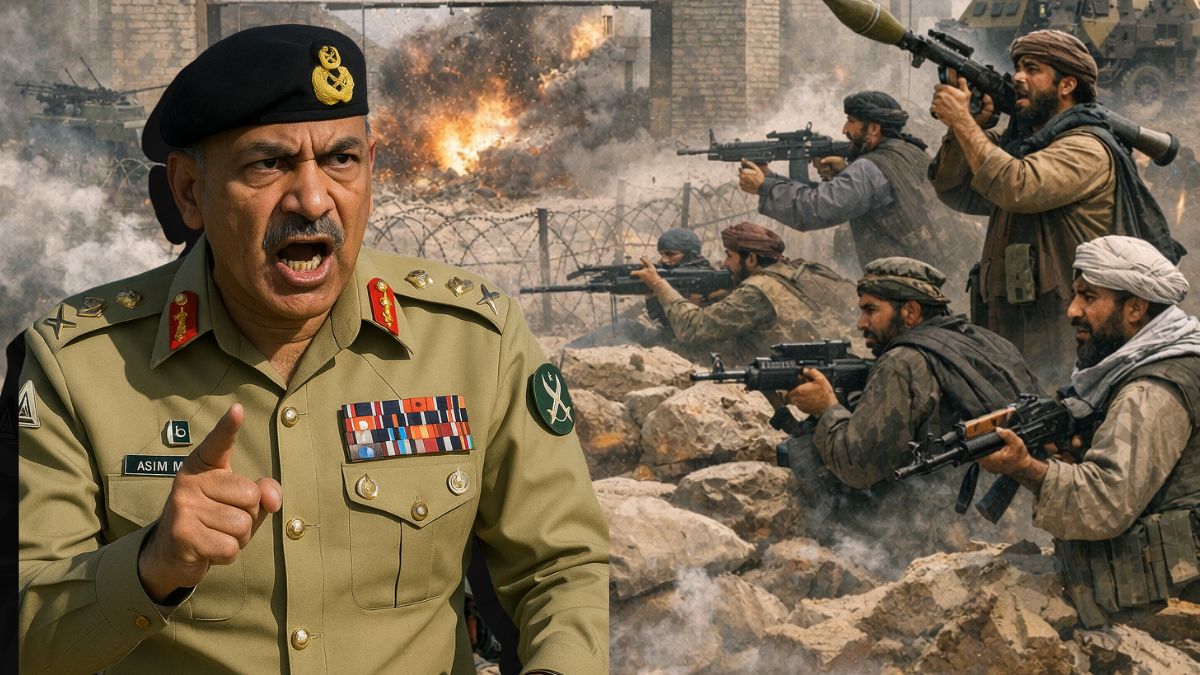
“Peace could only prevail between both sides if the Afghan Taliban renounced their support for terrorism,” Munir said. Image courtesy: AI-generated picture via Sora

Days after declaring the ongoing conflict with neighbouring country Afghanistan as “open war”, Pakistan has issued a stern warning to the Taliban leadership. Pakistan’s first Chief of Defence Forces Field Marshal Asim Munir has said lasting peace between the two countries is impossible unless Kabul stops supporting terrorist groups.
Munir made the remarks during a visit to Wana in South Waziristan, a key military zone in Pakistan’s Khyber Pakhtunkhwa province along the volatile Pakistan-Afghanistan border. According to Pakistan’s military media wing, the Inter-Services Public Relations (ISPR), the army chief reviewed security arrangements and operational readiness.
“Peace can only prevail if the Afghan Taliban renounce their support for terrorism and terrorist organisations,” the ISPR quoted Munir as saying.
What is behind the current Pakistan-Afghanistan conflict?
Relations between Islamabad and the Taliban-led government in Kabul have deteriorated sharply in recent years, largely due to accusations that Afghan territory is being used by militants to launch attacks inside Pakistan. The tensions escalated further after border clashes along the 2,600-kilometre frontier last year, triggering a cycle of retaliatory actions and military deployments on both sides.
Pakistan claims that militant groups such as the Tehreek-i-Taliban Pakistan (TTP) operate from Afghan soil. The Pakistani state refers to these militants as “Fitna al Khawarij.” It also uses the term “Fitna al Hindustan” to describe insurgent networks active in Balochistan.
Munir stressed that any use of Afghan territory for attacks against Pakistan would not be tolerated, warning that Islamabad would take all necessary steps to neutralise threats emanating from across the border.
What is Operation Ghazab Lil Haq?
During the visit, the army chief received a detailed briefing on Operation Ghazab Lil Haq, Pakistan’s ongoing military campaign targeting militant infrastructure along the western frontier.
The operation was launched after Pakistan carried out overnight airstrikes on alleged militant camps in Afghanistan’s Nangarhar and Paktika provinces last month on February 22. The Taliban retaliated with cross-border attacks, leading to an escalation in hostilities.
Pakistani officials have since indicated that cross-border military operations may continue until Kabul provides verifiable assurances that it will not allow militants to operate from Afghan territory.
Pakistan-Afghanistan conflict: Have diplomatic efforts failed?
Several attempts have been made to defuse the tensions through international mediation. Türkiye and Qatar hosted talks in Doha, where both sides agreed to a fragile ceasefire and discussed mechanisms to verify claims about militant activity. However, subsequent negotiation rounds failed to produce a formal agreement.
Pakistan has insisted that any long-term settlement must include concrete steps by the Taliban government to dismantle militant networks targeting Pakistan.
What message did Munir send to Pakistani troops?
During his visit to South Waziristan, Munir also paid tribute to soldiers killed in operations against militants. He laid a wreath at the martyrs’ monument and offered prayers, describing the sacrifices of fallen personnel as the “cornerstone” of Pakistan’s security.
The army chief praised the operational readiness and morale of troops deployed in forward areas, saying the military remains prepared to defend the country’s sovereignty and maintain stability along the western border.