US Arms Sale, Japan PM’s Taiwan Remark Put China Under Pressure; Beijing Turns Defensive, Ramps Up Warnings
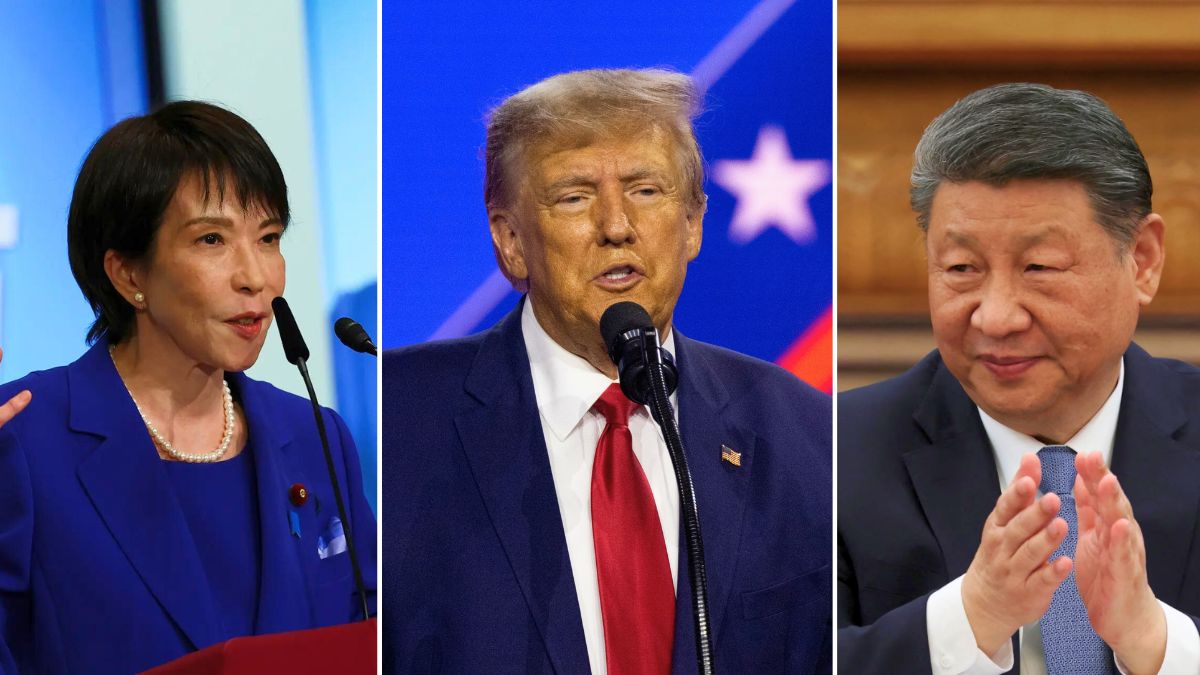
The US and Japan, both Taiwan’s key security partners, are taking more assertive positions amid China’s growing military activity around the island. Image courtesy: RNA

China is escalating its rhetoric and diplomatic pushback as Taiwan becomes a renewed flashpoint in global geopolitics. The triggers are multiple with the latest being United States’ (US) approval of a $330 million package of aircraft and fighter jet parts for Taiwan, the first such sale under the Trump administration.
Trump’s Taiwan arms sale, coupled with a sharp hardening of Japanese political messaging around a potential Taiwan conflict, has increased China’s worries, so much so that Beijing has reacted strongly to both the developments, and even asked its citizens to avoid travel to Japan.
On the $330 million arms sale, the US Pentagon said the parts sale would help Taiwan maintain operational readiness for its F-16s, C-130s, and other aircraft, which are crucial assets as the island faces persistent Chinese military pressure. Taipei welcomed the move, calling it a continuation of “regularised arms sales” and stressing that US support is a “cornerstone of Indo-Pacific stability.”
How China responded to US arms sales to Taiwan?
Beijing, however, reacted with its predictable and intensifying anger. China’s foreign ministry repeated that Taiwan is the “core of China’s core interests” and a red line in China–US relations. The United States, it said, must stop supporting “Taiwan independence” forces.
Immediately after Washington’s announcement, Beijing delivered a stern warning, accusing the US of “seriously undermining China’s sovereignty.” A mainland spokesperson, Chen Binhua, accused Washington of indulging Taiwan independence factions, sending “wrong signals”, violating the One China principle and the August 17 Communique.
Chen further warned that Taiwan’s ruling Democratic Progressive Party (DPP) is turning the island into a “powder keg” by relying on foreign support and increasing military spending. Beijing reiterated that “independence” and peace across the Taiwan Strait are fundamentally incompatible, threatening to take “all necessary measures” to protect its territorial integrity.
What is behind China’s fury towards Japan?
As Beijing clashes with Washington, Japan has simultaneously thrust itself into the Taiwan debate, causing a diplomatic uproar. New Japanese Prime Minister Sanae Takaichi, known for her tough stance on China, suggested in parliament that a military attack on Taiwan could trigger a Japanese military response under the “survival-threatening situation” clause.
In Tokyo, senior officials have also floated the possibility of revising Japan’s three non-nuclear principles, discussed future acquisition of nuclear-powered submarines, not ruled out “any options” amid rising security pressures. These signals represent a major break from Japan’s traditionally cautious post-war security stance.
To these, China responded with sharp diplomatic protests, by summoning Japan’s ambassador, warning Tokyo to “repent for its history of aggression”, accusing the country of making a “major negative policy shift”.
Beijing also escalated further by issuing a travel warning, telling Chinese citizens to avoid travelling to Japan, claiming Takaichi’s remarks have “created significant safety risks.”
What sparked the latest China–Japan diplomatic firestorm?
The situation intensified after a Chinese consul general in Osaka posted online, later deleted, a message appearing to threaten the Japanese PM, referencing “cutting off the intruding neck.” Japan condemned the remarks as “inappropriate,” summoned China’s ambassador and passed a resolution urging the envoy’s removal.
Meanwhile, China accused Japan of “damaging bilateral ties” and “provoking” China with its Taiwan-related comments.
Tokyo’s new Taiwan stance is fueled by concerns that any Taiwan conflict would quickly embroil Japan, given that some Japanese islands lie just 100 km from Taiwan.
Is China being squzeed on all sides over Taiwan?
The US and Japan, both Taiwan’s key security partners, are taking more assertive positions amid China’s growing military activity around the island, including regular PLA bomber and fighter sorties, naval deployments near Taiwan, intensifying “gray-zone” pressure campaigns.
Moreover, the US arms sale and Japan’s political hardening come at a time when Washington and Beijing are locked in strategic competition, trade and tariff issues. The timing is also important in terms that Taiwan is seeking stronger international support while China fears a widening coalition willing to counter its Taiwan ambitions.
As a result, Beijing is becoming simultaneously defensive and aggressive, confronting the US, pressuring Japan, and warning Taiwan, while signaling that force remains on the table.