


US Pentagon Flags China’s Claim on Arunachal Pradesh as ‘Core Interest’ in Annual Military Report
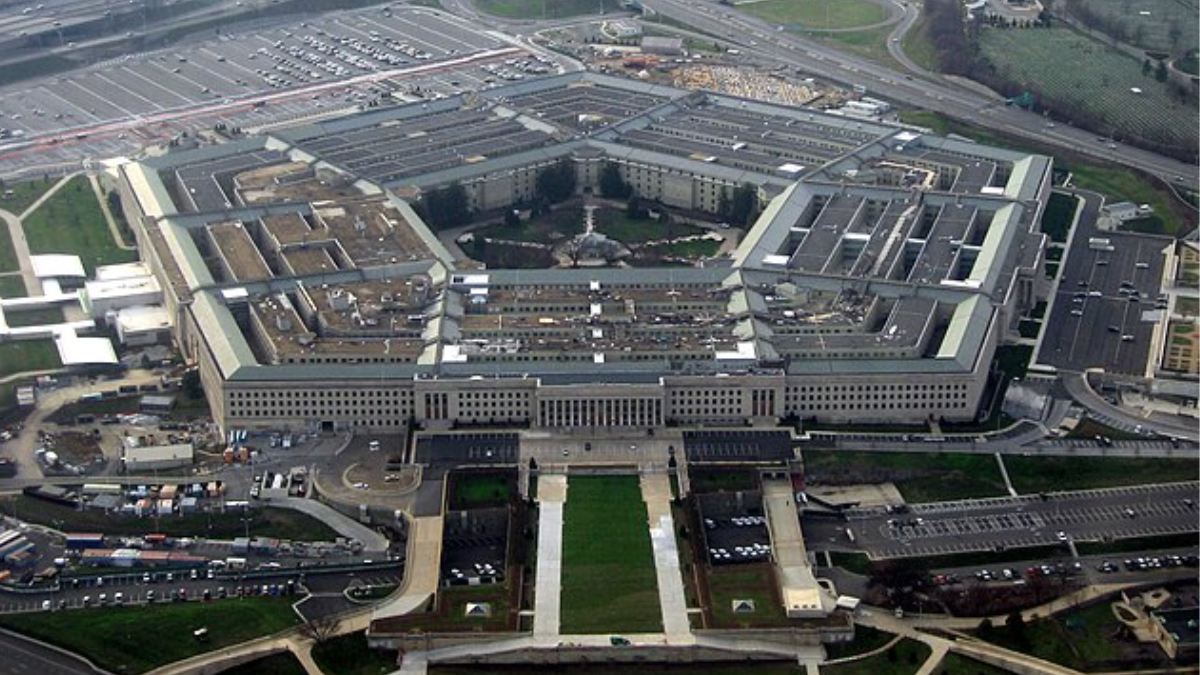

The US Department of Defense has explicitly identified Arunachal Pradesh as part of China’s expanded list of “core interests,” placing India’s northeastern state alongside Taiwan and the South China Sea in Beijing’s non-negotiable sovereignty claims, according to its latest annual report on China’s military and security developments.
What did the US report say about Arunachal Pradesh?
The assessment, submitted to the US Congress, marks a significant articulation of how Washington views China’s evolving territorial posture, particularly in relation to India-China tensions following the 2020 Line of Actual Control (LAC) standoff. By categorising Arunachal Pradesh within China’s core interests, the report underlines the strategic sensitivity Beijing attaches to the disputed boundary and the long-term implications for regional stability.
What is the US report on China and its focus?
Officially titled the Report to Congress on Military and Security Developments Involving the People’s Republic of China, the document has been commissioned annually since 2000. Spanning over 100 pages, the latest edition examines China’s military modernisation, internal political dynamics, foreign military ties, and regional disputes, with specific references to India, Pakistan, Russia, Taiwan, and Southeast Asia.
What are the core interests of China?
According to the report, China defines its core interests as three non-negotiables: the Chinese Communist Party’s control, sustained economic development, and the defence and expansion of sovereignty and territorial claims. The Pentagon notes that this definition now explicitly includes “Taiwan and China’s sovereignty claims amid territorial disputes in the South China Sea, the Senkaku Islands, and the northeastern Indian state of Arunachal Pradesh.”
How is the US report justifying its assessment of Arunachal Pradesh?
The report places this posture within Beijing’s broader national strategy of achieving the “great rejuvenation of the Chinese nation” by 2049, a narrative rooted in China’s historical grievances over colonial-era exploitation. In this context, territorial claims, particularly along disputed borders, are framed domestically as essential to national revival and regime legitimacy.
What does the US report say about India-China relations?
On India-China relations, the Pentagon refers to developments following the prolonged military standoff along the LAC. It notes that in October 2024, Indian leaders announced an agreement with China to disengage from remaining friction points along the border, just days before President Xi Jinping met Prime Minister Narendra Modi on the sidelines of the BRICS Summit. While this step marked the beginning of a limited normalisation process, the report cautions that deep mistrust continues to shape bilateral ties.
What is the US report’s assessment of China’s thaw with India?
“China probably seeks to capitalise on decreased tension along the LAC to stabilise bilateral relations and prevent the deepening of US-India ties,” the report states, adding that India remains sceptical of Beijing’s intentions, limiting the scope of any broader rapprochement.
Why did China reject the US report assessments?
Beijing rejected the Pentagon’s conclusions. A Chinese defence spokesperson accused the report of misrepresenting China’s national defence policy to mislead the international community, while a foreign ministry spokesperson reiterated that the boundary issue with India is a bilateral matter and claimed the situation is “generally stable with smooth communication channels.”
Beyond Arunachal Pradesh, the report highlights China’s military focus on Taiwan and the South China Sea, ongoing corruption-related purges within the PLA, and rapid advances in technologies such as artificial intelligence, factors Washington sees as reshaping the regional security landscape.