


Why Putin’s Hypersonic Missile Is Challenging NATO As Greenland Tussle Tests Western Alliance In Europe

Russia’s use of a hypersonic missile in Ukraine and parallel tensions over Greenland highlight a deeper churn in European geopolitics as NATO grapples with strategic signalling from Moscow and strains within the Western alliance. Image courtesy: AI generated picture via DALL-E

The gruelling four-year Russia-Ukraine war and the recent verbal battle over Greenland between the US and European nations have raised a larger, unsettling threat for NATO.
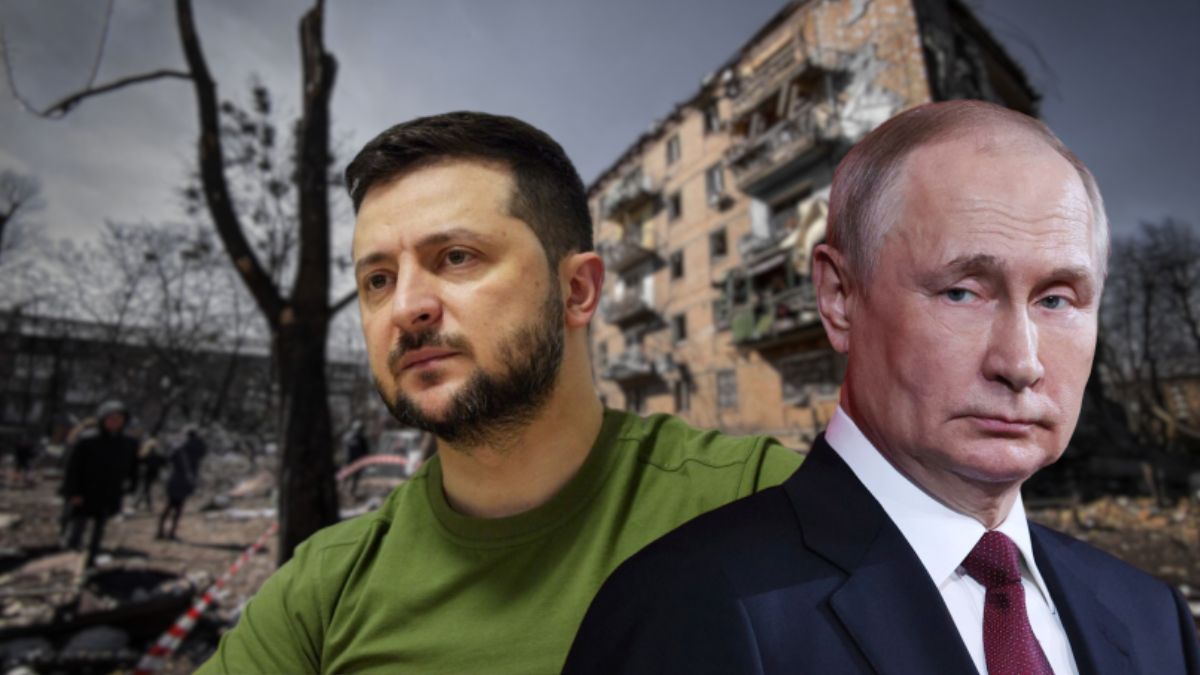
Last week, Russian President Vladimir Putin tested that question by firing one of his potent hypersonic missiles, the Oreshnik, into Lviv in Ukraine, taking out a gas storage facility.
NATO, on its part, was quietly engaged in “business as usual” rhetoric over the so-called Russian threat to Greenland, even as its members tussled with the US over the control of the Denmark-administered autonomous island territory.
Taken together, the two unrelated developments relay the same message and reality: European geopolitics and the Western alliances are currently in a huge, uncertain churn.
How did Russia’s use of the Oreshnik missile matter?
Fired just for the second time since February 2022, Russia’s Oreshnik intermediate-range ballistic missile is capable of covering over 12,000 kmph and carrying multiple warheads to strike at intended targets.
Russia used the Oreshnik to hit the gas storage facility near Lviv, a town just a short distance away from Poland’s border inside Ukraine.
Putin’s choice of the Oreshnik missile to hit Ukraine’s energy facility was a deliberate message to not just Kyiv, but also to all other European nations, particularly the NATO members.
Hitting a facility so close to NATO territory is the Kremlin’s blunt message and reminder that Russia can hit any European capital at will and also maintain a moral ascendancy and unmatched capability to strike anywhere in the continent without any warning or the ability to stop and intercept the missile.
What was Russia’s message to Europe?
The striking message was apparent: Even though Russia’s conventional armed forces’ capability and reputation as a military power may have dwindled, it still possesses enough arsenal to retaliate, or even do a first strike on NATO.
Russia’s claimed victories in eastern Ukraine and its territorial advances, though fact-checked by the international media and entities quite often, may be unconvincing.
Russian equipment, deployed by its friends and allies in a distant battlefield, may have even failed to protect them, raising a question mark over Moscow’s ability to project power.
But, as noted by military analysts frequently, it is not Russia’s intent, but its capability, that should be the parameter to assess its military strength.
What military capabilities does Russia possess?
Russia today has in its inventory a battle-hardened, larger force levels that it did in 2022, what with the military industrial complex producing more than it did at the beginning of the conflict to sustain a fighting war machine.
The Russian military command-and-control structure has vastly improved since 2022, thanks to the Ukraine military operations it is currently mounting, which helps it to tweak and overcome weaknesses noticed during the warfighting.
Moscow has also greatly enhanced its advantage in drone and electronic warfare, while its air force, reshaped by the losses in war, has gained battle experience to adapt to high-intensity, enduring conflict.
This is of particular concern for NATO, as a confrontation that is now panning out in Europe doesn’t resemble the Ukraine war in any way. Russia can now rely on intimidation, advanced hybrid tactics, and strategic signaling, as the Oreshnik hit on Lviv intended to achieve.
How are the Russian methods playing out in the Arctic?
That same playbook is now being played out thousands of kilometres north, in the Arctic. The United Kingdom on Sunday (January 11, 2026) confirmed that NATO was still discussing keeping Russia in abeyance in Greenland, the talks on which were termed as “business as usual.”
Reports have emerged that the military chiefs of European nations discussed contingency plans for a NATO intervention in Greenland and the Arctic region to thwart Russian activities there.
Greenland has become too important now, due to its geographical location astride the key Arctic sea lanes, where Russia has been unusually active in recent years.
Greenland is also host to critical missile warning and space surveillance infrastructure, a capability that the US is eyeing when President Donald Trump asserts he would want to take over and control Nuuk.
What plans were the NATO military chiefs debating?
While the UK joined Germany, France, and other NATO allies in the talks, the military chiefs of these nations have placed their bets, ranging from troop deployments, naval blockade, and air force patrols over Greenland.
Germany, on its part, may propose a joint NATO mission at Nuuk to concentrate on Arctic security, indicating the serious nature of the military proposals under consideration for the region to handle a potential conflict there.
However, in public, the NATO leadership has downplayed the sense of urgency in these military talks.
UK Transport Minister Heidi Alexander noted that the discussion was routine, though the Arctic region was becoming an increasingly contested geopolitical space, primarily due to both Russian and Chinese interests there.
A UK government spokesperson, though, reiterated Britain’s commitment to strengthening NATO’s Arctic deterrence and defence.
How has Trump muddled the Arctic geopolitics?
The larger geopolitics involving the Arctic region in general, and Greenland in particular, are muddled by the involvement and the intent expressed by US President Donald J. Trump in recent weeks.
Trump has repeatedly argued that Washington must “own” Greenland to prevent Russia or China from exploiting its strategic value. But Denmark has vehemently rejected the US claims and challenged the idea of Russian threats by citing vessel-tracking data.
German Foreign Minister Johann Wadephul, though, proposed that all Greenland- and Arctic-related differences must be debated within NATO, and the people of Greenland should decide their future.
NATO’s overwhelming sense, however, is that the absence of Russian ships near Greenland doesn’t indicate there is no threat to the island territory.
In the Arctic — a low-population and high-value region — what matters more for the NATO planners is the actual deployments rather than signals, presence, and deterrence.