

Putin’s Nuclear Commitment, Counter Terrorism, Maritime Training: Major Announcements From Modi-Putin Summit
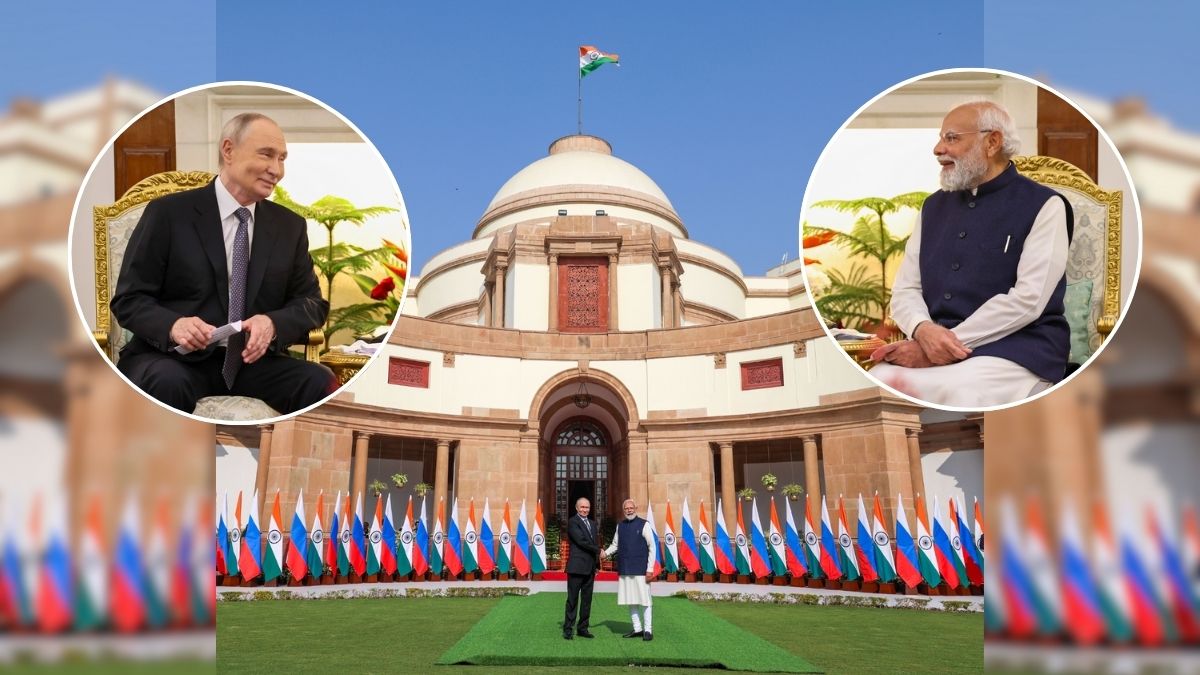

Russian President Vladimir Putin’s two-day state visit to New Delhi has resulted in one of the most expansive rounds of agreements between India and Russia in recent years, signalling a renewed push to modernise cooperation across nuclear energy, migration, healthcare, maritime operations, academia and media.
While there was nothing specific for the defence sector, as hoped, but there were a number of major announcements. The visit, Putin’s first to India since the start of the Ukraine war, also marked the 23rd India–Russia Annual Summit, hosted by Prime Minister Narendra Modi at Hyderabad House.
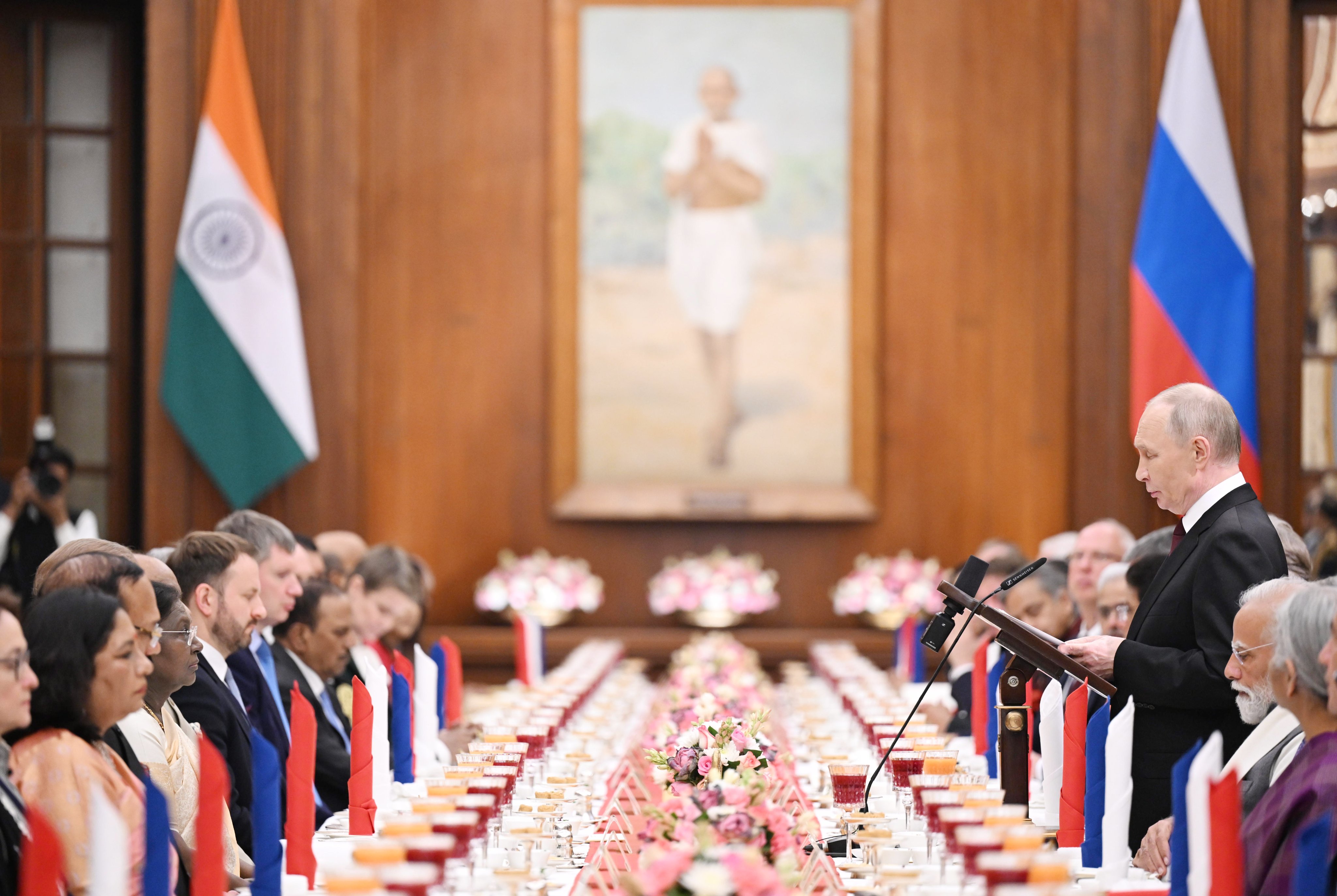
The message from both capitals was clear that despite global geopolitical turbulence, India and Russia are consolidating long-term strategic cooperation. In his first visit to India in four years, Russian President Putin vowed their collaboration at Kudankulam, the largest nuclear plant in India.
Kudankulam plant: A centrepiece of India–Russia nuclear partnership?
A major highlight of the visit was Moscow’s reaffirmation of its commitment to the Kudankulam Nuclear Power Plant (KKNPP), India’s biggest nuclear energy project. President Putin announced that two of the six planned VVER-1000 reactors are already operational and connected to the grid, while four others are under construction.
Russia’s ambition is to help India bring the plant to its full 6,000 MW capacity, which both sides described as a key pillar of India’s energy security. “We’re conducting a flagship project to build the largest Indian nuclear power plant, Kudankulam. Getting this nuclear power plant to full power output will make an impressive contribution to the energy requirements of India,” Putin said.
Putin’s visit coincided with Rosatom delivering its first consignment of nuclear fuel for the initial loading of the plant’s third reactor. The full consignment, spread across seven cargo flights, is being delivered under a 2024 long-term fuel-supply contract covering the third and fourth reactors for their entire service life.
How else are India and Russia are collaborating on nuke front?
Putin also proposed expanding cooperation into next-generation nuclear technologies, including small modular reactors, floating nuclear power platforms, and non-power applications such as nuclear medicine and agriculture. The Russian President emphasised that Moscow remains a reliable supplier of oil, gas, coal and nuclear fuel for India’s growing energy needs.
“We presume that we could talk about the construction of small modular reactors and floating nuclear power plants, and also non-energy applications of nuclear technologies, for example, in medicine or agriculture,” said the Russian President.
What was announced on counter-terrorism?
Both sides reaffirmed their commitment to strengthening bilateral and multilateral cooperation in the field of combating such common challenges and threats such as terrorism, extremism transnational organized crime, money laundering, terrorist financing and illicit drug trafficking.
Putin and PM Modi reaffirmed their strong commitment to preventing and countering terrorism in all its forms and manifestations. They condemned in the strongest terms the terrorist attack in India in Pahalgam, Jammu and Kashmir, on April 22, 2025, and in Russia at the Crocus City Hall in Moscow on March 22, 2024.
They also called for concerted actions against all UN-listed terrorist groups and entities, including Al Qaeda, ISIS/Daesh and their affiliates, aimed at rooting out terrorists’ safe havens, countering the spread of terrorist ideology, eliminating terrorist financing channels and their nexus.
India-Russia agreements 2025: What else was announced in Modi-Putin summit?
During the 23rd Annual Summit, India and Russia signed a wide-ranging set of agreements covering migration, healthcare, maritime cooperation, education and media during President Vladimir Putin’s state visit to New Delhi, as both sides moved to bolster strategic ties and ease cross-border mobility.
PM Modi and Putin positively assessed the multi-faceted mutually beneficial India-Russia relations that span all areas of cooperation, including political and strategic, military and security, trade and investment, energy, science and technology, nuclear, space, cultural, education and humanitarian cooperation. It was noted with satisfaction that both sides are actively exploring new avenues for cooperation.
Migration and Mobility: In one of the most consequential outcomes of the summit, India and Russia signed landmark agreements on managed labour mobility and combating irregular migration. These pacts are designed to ease cross-border movement of workers, protect their rights, and create transparent channels for legal employment in each other’s territory.
These agreements establish a framework for the movement of skilled workers from India to Russia and aims to promote safe and mutually beneficial migration between the two countries.
Health and Food Safety: Public health emerged as a major area of cooperation, with both countries signing agreements on medical education, scientific exchange and healthcare systems. India’s Food Safety and Standards Authority also entered a pact with Russia’s federal surveillance body to harmonise food safety regulations.
Maritime Cooperation and Polar Waters: Another focus area that stood out was maritime training, particularly for operations in polar waters. Two MoUs were signed to train Indian sea farers for vessels operating across Arctic sea routes. They also entail cooperation in various sectors of maritime domain such as shipping, ports, joint mineral exploration.
Fertilisers: Indian public-sector companies and Russia’s UralChem finalised a cooperation framework aimed at ensuring assured, long-term supply of fertilisers to India.
Customs and Commerce: A protocol between the Central Board of Indirect Taxes and Customs of the Indian Government and the Federal Customs Service (Russian Federation) for cooperation in exchange of pre-arrival information in respect of goods and vehicles moved between the two countries.
Additionally, India and Russia also signed a bilateral agreement to boost cross-border postal cooperation and support growing e-commerce between India and Russia, especially for Small and Medium Enterprises.
Academia Collaboration: Educational ties received a significant boost through new MoUs between DIAT Pune and Tomsk State University, and a trilateral agreement involving the University of Mumbai, Moscow State University and Russia’s sovereign wealth fund. These collaborations are intended to expand scientific research, defence technology studies and student exchange programmes.
Media Collaboration: It deepened substantially, with Prasar Bharati entering multiple agreements with major Russian broadcasters and media groups, including Gazprom Media, National Media Group, Big Asia and TV BRICS. The agreements aim to strengthen content exchange, co-productions and cultural broadcasting.
Which other announcements will shape India–Russia relations Till 2030?
Both nations adopted a Programme for Strategic Areas of India–Russia Economic Cooperation till 2030, providing a long-term blueprint for collaboration across energy, space, manufacturing, transport and digital technologies. In a symbolic highlight, Russia agreed to join India’s International Big Cat Alliance (IBCA), a global conservation initiative led by New Delhi.
Cultural ties received a push with a major exhibition, India: Fabric of Time, set to be showcased in Moscow. India also announced gratis 30-day e-tourist visas and group tourist visas for Russian nationals, aiming to revive tourism flows after the pandemic and geopolitical disruptions.


