

Maritime Security Natural Pillar For India-EU Ambitions: EU Naval Officer Calls IFR Catalyst, Backs Deeper Ties
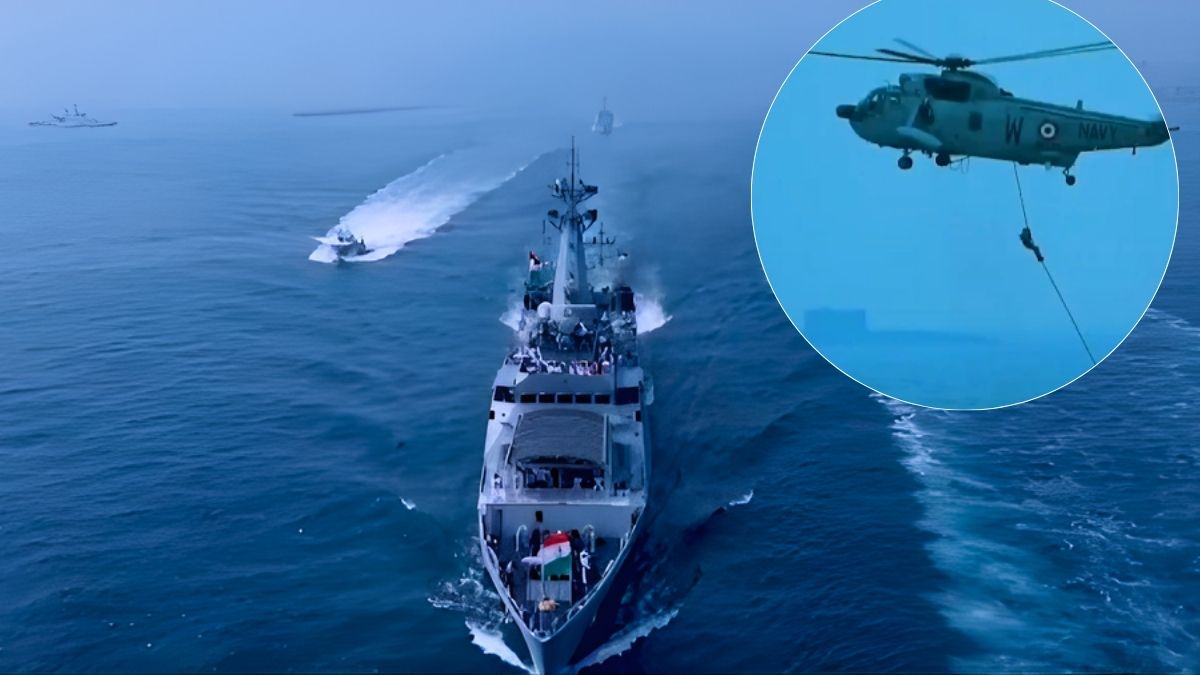
Calling IFR a catalyst, the EU commander said the event allows India and Europe to align strategic priorities. Image courtesy: RNA

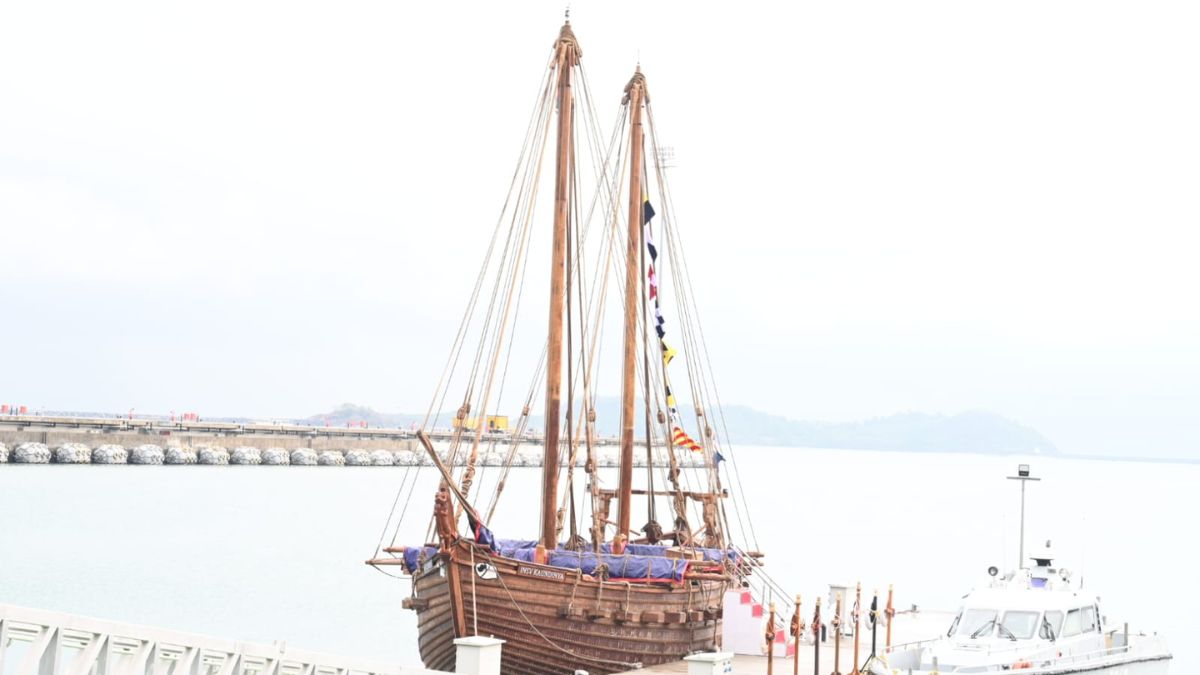
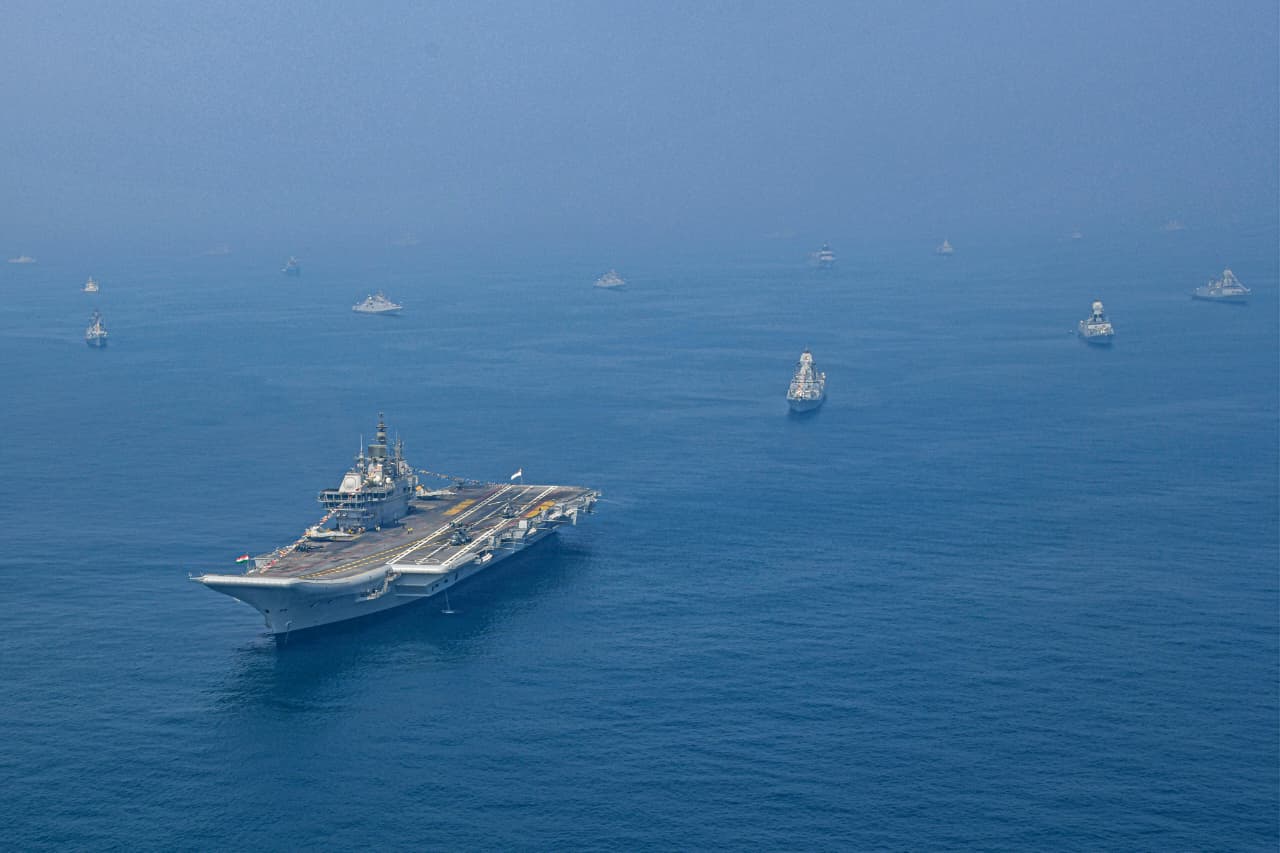
Witnessing participation from 74 countries, the Indian Navy successfully conducted the International Fleet Review (IFR) 2026 off the coast of Visakhapatnam on Wednesday (February 18, 2026). It not only marked a grand maritime spectacle, but also showcased global naval cooperation, professional camaraderie and India’s maritime capability.
As the Navy hosted this major naval confluence, a senior European Union naval commander delivered a clear message that India is no longer just a regional maritime power, it is a central pillar of Indo-Pacific security. He even stressed that India is now a net security provider.
Vice Admiral Ignacio Villanueva Serrano, Operation Commander of EU NAVFOR Operation Atalanta, said the unprecedented scale of participation reflects global confidence in India’s naval leadership. Notably, the EU commander’s remarks come just days after India and the European Union announced the long-awaited Free Trade Agreement (FTA).
Why did the EU call India a ‘net security provider’?
Vice Admiral Villanueva, in an exclusive interaction with India Today, said the presence of nearly 70 countries at IFR 2026 was not ceremonial, it was strategic. He noted that “the presence of nearly 70 countries highlights India’s credibility as a maritime partner and a net security provider.”
(2)3A7Y.jpeg)
The EU commander praised the Indian Navy’s operational maturity and its ability to engage seamlessly with diverse naval forces, from the Indo-Pacific to Europe and Africa.
IFR, he said, provides a rare convergence of strategic dialogue, operational exchanges, confidence-building measures.
Why is India-EU maritime cooperation gaining momentum now?
The timing is significant. The comments come days after India and the EU announced the “mother of all trade deals”, a deal expected to significantly deepen economic and defence ties. According to Villanueva, maritime security is no longer isolated from trade and industrial cooperation.
“As India and the EU move ahead on defence cooperation and trade frameworks, maritime security becomes a natural pillar supporting those ambitions,” he said.
The EU commander dubbed IFR as a catalyst, noting that the event allows India and Europe to align strategic priorities at a time when sea lanes, energy flows, and global commerce face mounting challenges. Worth mentioning here is that several geopolitical disruptions have affected the Red Sea, Gulf of Aden and wider Indo-Pacific.
How important is the Indian Navy to European operations?
The EU’s anti-piracy mission, Operation Atalanta, has worked closely with the Indian Navy in the Gulf of Aden and western Indian Ocean. Villanueva described this coordination as a benchmark for multilateral naval cooperation. The operational synergy, he said, has built trust that can now expand into joint exercises, defence-industrial partnerships, maritime domain awareness, protection of strategic sea lanes.
The International Fleet Review in Visakhapatnam has evolved beyond a ceremonial naval showcase. India’s centrality in maritime diplomacy is becoming increasingly evident. “A strong India–EU partnership at sea also strengthens economic security and trade resilience,” he added.