
China’s Strategic Recalibration In Nepal’s Shifting Political Landscape
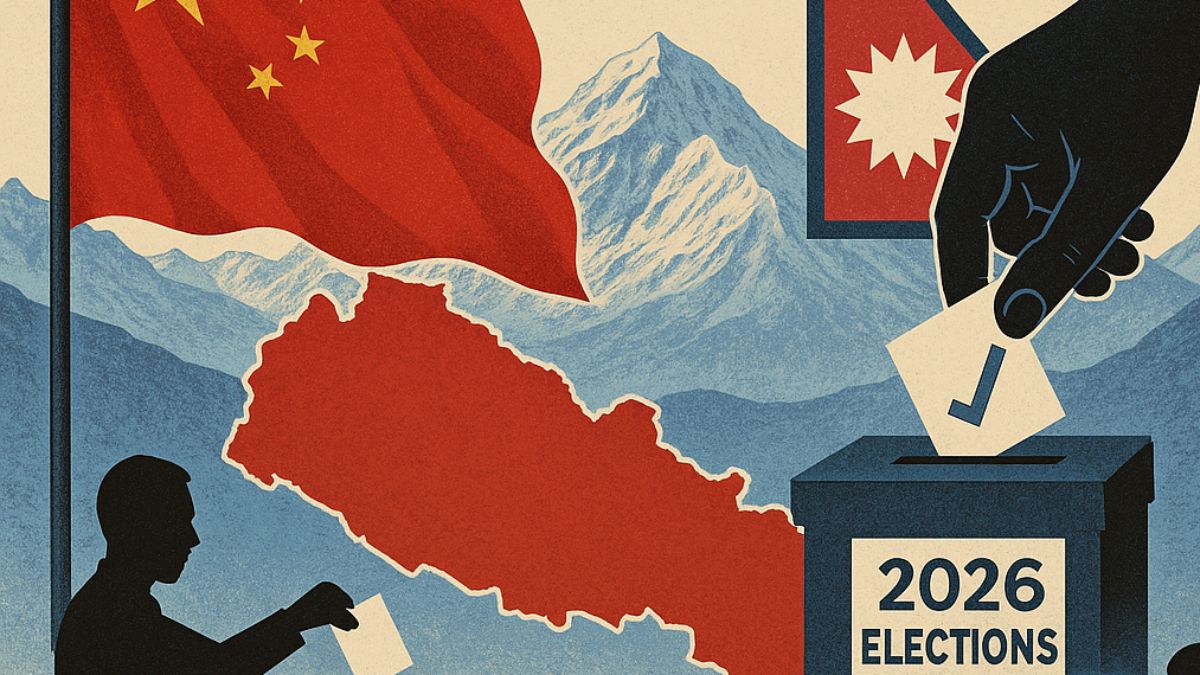
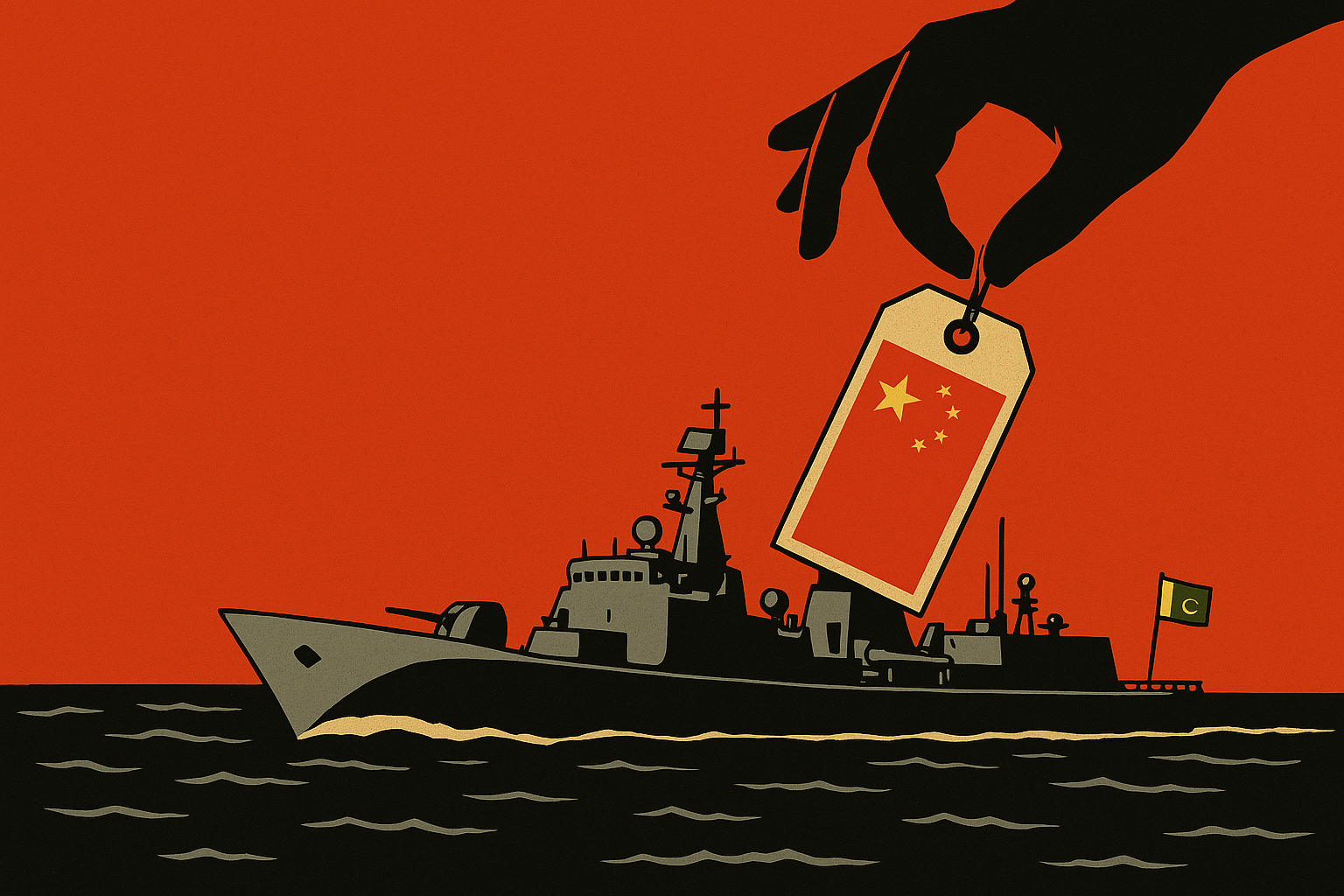
As Nepal’s politics enter a more fluid phase, Beijing is being forced to rethink how it engages with power structures that are no longer as predictable as before. Image courtesy: RNA

Nepal’s political landscape has long been shaped by its geography, situated between India and China, and by the strategic competition that unfolds across the Himalayas.
Historically, China’s engagement with Nepal centered on security imperatives and concerns related to Tibet.
But over the past decade, Beijing’s presence has expanded swiftly into political, infrastructural, economic, and informational spheres.
This growing footprint has fuelled increasingly vocal debates about a “Chinese hand’’ in Nepal’s 2026 elections, intensified further by political churn, fragile coalitions, and shifting geopolitical alignments.
Nepal’s dynamic domestic political landscape, characterised by recurrent governmental reorganisations since 2008, has established a conducive environment for foreign influences such as China, whose involvement now transcends mere infrastructural development and ceremonial diplomacy to encompass political party strategies, elite networks, and narratives that shape governance.
The ousting of former Prime Minister KP Sharma Oli in September 2025 has had a significant contradiction in China’s approach.
Although there exists no public evidence indicating that Beijing directly orchestrates electoral results, the enduring diplomatic patterns, elite interactions, and political affiliations it fosters unveil a more nuanced reality; China endeavors to exert influence over Nepal’s political arena indirectly, via party mediation, economic incentives, and narrative construction.
Collectively, these elements emphasise the intricacy of China’s involvement, exerting influence without formal accountability, obtaining substantial access, and pursuing strategic objectives that are perpetually adjusted to navigate the uncertainties of Nepalese politics.
Beijing’s Intensified Outreach and the Strategy of Cautious Continuity
Beijing has markedly intensified its diplomatic engagement with Nepal, underscoring the strategic weight it attaches to the bilateral relationship in the run-up to the 2026 elections.
On November 15, 2025, the Chinese Ambassador to Nepal stated that Beijing would extend “every possible support” to Nepal’s interim government to ensure a smooth electoral process.
Furthermore, Beijing expressed profound gratitude for Nepal’s unwavering commitment to the One-China Policy, highlighting the reassuring observation that even the nascent leadership of Nepal’s Gen-Z exhibits no deviation from this established stance.
China’s “Cautious Continuity” and the Challenge of Recalibration
The political downfall of KP Sharma Oli represents a considerable hindrance for Beijing.
Over the course of more than 10 years, China has meticulously fostered profound affiliations with the leftist factions in Nepal, with Oli emerging as its most dependable and ideologically compatible ally.
To Beijing, he was not merely friendly; he was dependable, statist in governance style, and unwavering in his commitment.
The Gen-Z–led uprising, however, fundamentally disrupted the political rationale that China had historically depended upon.
What collapsed was not only a strategic policy framework, but the elite network Beijing had painstakingly built over a decade.
Its trusted intermediaries were suddenly gone. China’s initial reaction reflected this anxiety.
The foreign ministry issued only a brief, cautious statement, hoping that “social order be restored,” while state media framed the turmoil as a symptom of Nepal’s structural governance weaknesses, corruption, economic stagnation, and institutional decay, rather than an indictment of the political class China had supported.
Why Beijing’s Post-Oli Environment Is Harder, Not Just Different
Beijing’s immediate response after Oli’s fall was to re-anchor itself quickly. Ambassador Chen Song intensified political outreach, reaffirming China’s “deep commitment” to Nepal’s stability and promising “every possible support” for the March 2026 elections.
He highlighted progress in BRI projects and stressed China’s readiness to expand market access for Nepali agricultural goods. He pointed out that Nepal-focused initiatives have already been written into China’s 15th Five-Year Plan, a signal of long-term strategic intention.
Yet beneath this confident messaging lies a more difficult reality: China has lost the political architecture through which it traditionally exercised influence.
The collapse of Oli’s government has eliminated the central conduit Beijing relied on, a cohesive leftist bloc that shared its geopolitical instincts and acted as a predictable partner in Kathmandu’s shifting political terrain.
The emerging political elite is characterised by a younger demographic, increased fragmentation, and diminished ideological foundations. While Gen-Z leaders are not anti-China, they are likewise not entrenched in the personal, historical, or inter-party connections that previously facilitated Beijing’s influence.
Their authority is derived from public mobilisation, demands for transparency, and a rejection of elite negotiation, all of which contribute to rendering subtle political manoeuvering considerably more complicated.
However, experts feel that Beijing can still project influence, but it can no longer do so through a single dependable alliance or a stable partisan ecosystem.
Its challenge is not simply to recalibrate, it is to operate in an environment where the tools it trusts most have become less effective, less discreet, and less guaranteed to produce outcomes.
Trying to Shape the 2026 Elections, but with Sharply Reduced Leverage
Considering recent challenges, Beijing continues to assert itself as a proactive and strategic actor within Nepal’s dynamic electoral framework.
The current approach, however, exhibits significant diversification compared to previous electoral cycles.
Rather than depending on a singular political anchor, exemplified by the Oli-led left alliance of prior years, China has expanded its engagement across various political factions, maintaining relationships with the UML, re-establishing connections with the Maoist Centre, and enhancing economic diplomacy with the Nepali Congress.
Simultaneously, it has expedited select Belt and Road Initiative (BRI) projects, augmented import quotas for Nepali agricultural commodities, and intensified communications that depict political stability as the cornerstone for economic progress.
These initiatives do not constitute direct interventions to manipulate electoral outcomes.
Rather, they contribute to shaping the political milieu by presenting certain leaders and parties as more credible, pragmatic, and globally integrated than their counterparts.
The limitations of this strategic approach are becoming increasingly apparent. The emergence of Gen-Z mobilisation, characterised by a pronounced resistance to opaque negotiations and a heightened awareness of foreign influence, has rendered political brokerage more perilous and subject to intensified scrutiny.
The fragmentation of Nepal’s coalitions further exacerbates any attempt to sway political outcomes, while a more assertive Indian diplomatic initiative has resulted in China confronting a contested geopolitical landscape, in stark contrast to the relatively accommodating environment it once experienced.
Henceforth, China’s involvement in the 2026 elections is characterised neither by dominance nor by insignificance: it remains active yet constrained, influential but no longer structurally privileged, involved in shaping the political context yet incapable of ensuring the ultimate distribution of power.
Conclusion: Influence Without Certainty
China’s evolving role in Nepal’s political transition signifies a broader shift in regional geopolitics.
Beijing is more invested, more visible, and more sophisticated in its engagement than ever before, yet paradoxically less able to convert access into predictable political outcomes.
The fall of its most reliable ally, the rise of youth-driven politics, intensifying scrutiny of foreign influence have collectively shrunk the space in which China once operated with considerable ease.
As Nepal heads toward the 2026 elections, Beijing’s strategy rests on dispersed engagement, economic incentives, and stability-oriented narratives, tools that shape the political climate but cannot determine its conclusion.
Ultimately, China’s role in Nepal is significant but not decisive, embedded yet constrained, a reminder that even major powers must adapt to the uncertainties of democratic politics in smaller neighboring states.