


Forced Disappearances In Xinjiang Leave Families Without Answers
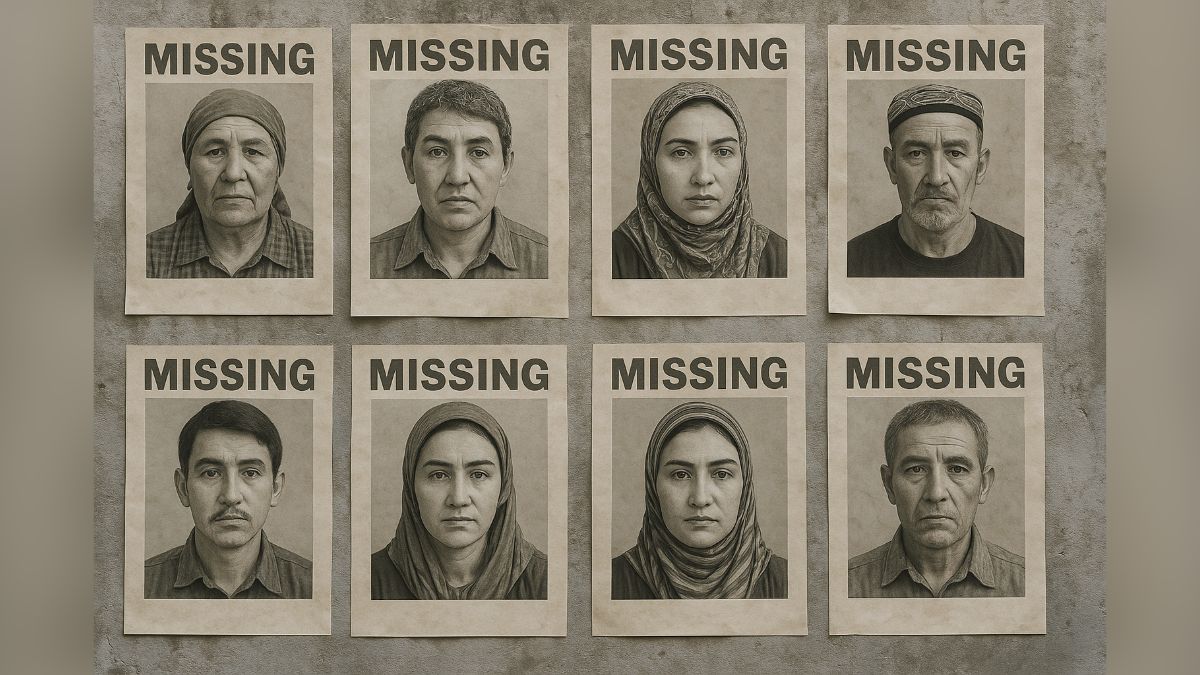
The wait for kinsmen forcibly disappeared is endless for many Uyghur Muslims. Image courtesy: AI-generated picture via Sora

Forced disappearances have become one of the most distressing aspects of daily life for Uyghur families. Across Xinjiang, individuals have vanished into a system marked by limited transparency, unclear charges and restricted communication. For many families, the absence of information is more painful than the detention itself.
These disappearances affect workers, students, academics, artists and community figures. The pattern reflects a structure in which individuals can be removed from public life with little procedural clarity, leaving families in prolonged uncertainty.
Why do forced disappearances occur in Xinjiang?
Disappearances in Xinjiang are connected to the state’s focus on maintaining what it describes as “social stability”. Individuals may be taken for reasons that are not publicly disclosed, including perceived ideological risks, overseas contact or minor behaviours classified as “unusual”.
Families often receive no formal documentation. In some cases, officials provide short explanations that the person is undergoing “training” or “education”, without allowing visits or legal consultation. In other cases, no information is provided at all.
This ambiguity creates an environment in which disappearance becomes a tool of administrative control, rather than a formal legal sanction.
How do these disappearances impact families?
Families experience psychological, social and economic strain. Many avoid asking questions to prevent further scrutiny. The uncertainty surrounding a relative’s status affects family routines, income and emotional stability. Parents may not know if their children are attending classes, detained in facilities or living elsewhere under supervision.
In several towns, families must navigate the disappearance of primary earners. This can lead to financial hardship, especially when combined with administrative restrictions that limit mobility or employment. Community solidarity is also affected, as neighbours exercise caution when discussing missing individuals.
The result is a prolonged period of waiting without any concrete information.
What does this reveal about the rights environment in Xinjiang?
Forced disappearances illustrate the opacity of administrative processes in Xinjiang. When individuals vanish without formal charges, avenues for redress become limited. The lack of clear communication prevents families from seeking assistance or representation.
This environment deters others from speaking openly about their concerns. It reinforces the message that questioning administrative decisions may lead to additional pressure. Over time, disappearances reshape social behaviour, creating communities where silence is seen as the safest option.
The persistence of these cases reflects a broader system that prioritises control and predictability over transparency and legal clarity.