
No Peace Without Parity: Rethinking Pakistan’s Coercion Of Afghanistan
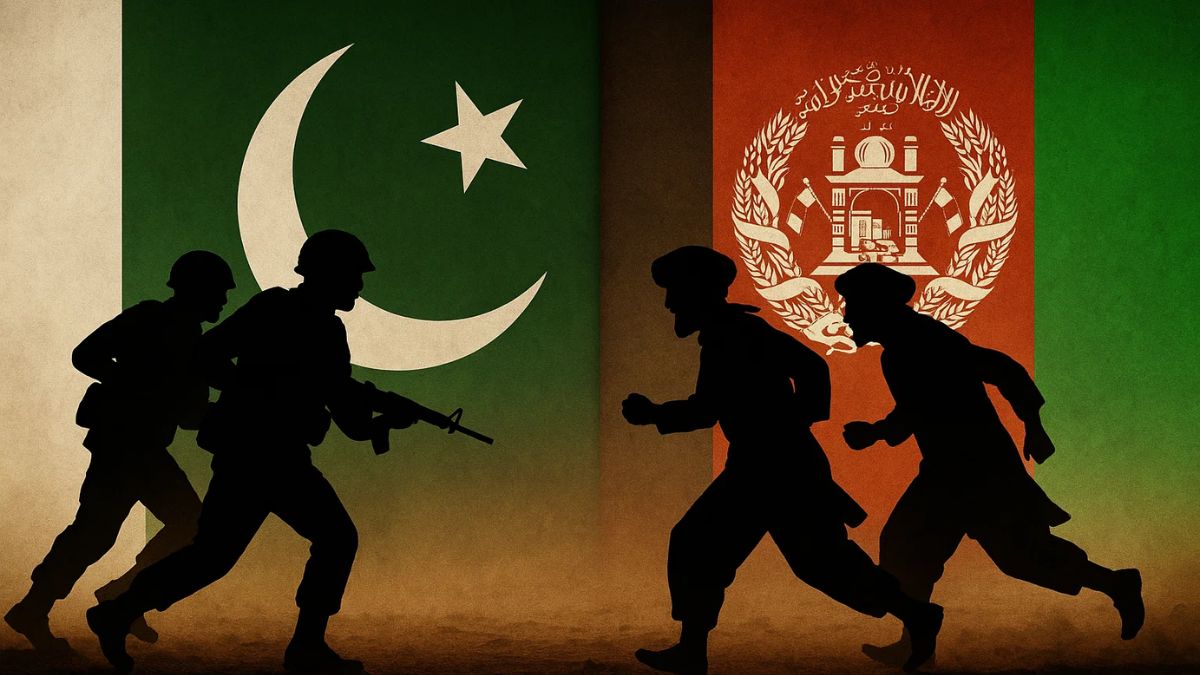
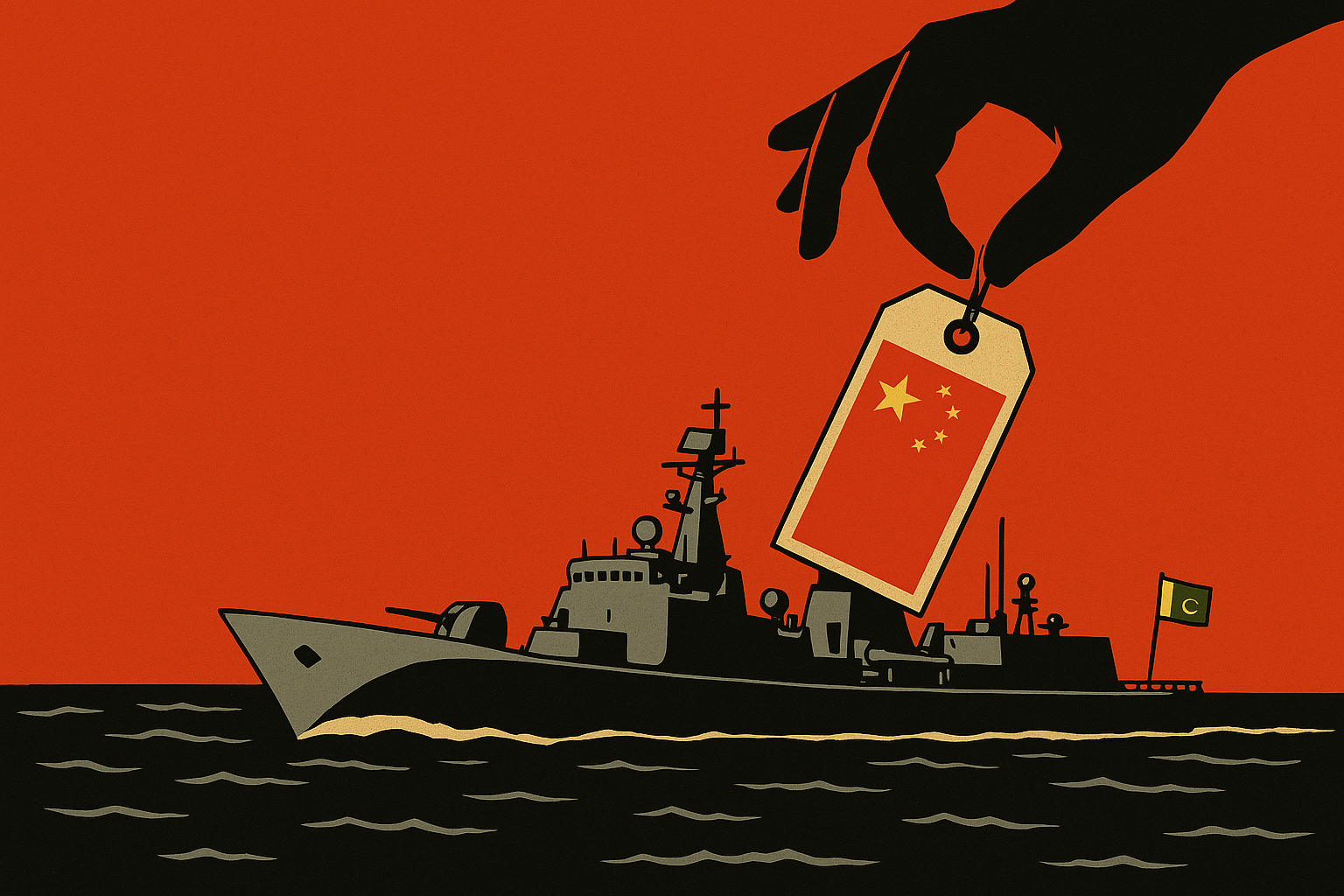
At the core of yhe Pakistan-Afghanistan conflict is how Islamabad treats the smaller. war-torn country. Image courtesy: AI-generated picture via Sora

The Pakistan-Afghanistan relationship has long been defined by asymmetry, a struggle between a militarised regional power and a smaller, war-torn neighbour seeking autonomy.
Since 1947, disputes such as the Durand Line have symbolised Pakistan’s desire to shape Afghanistan’s political future within its sphere of influence.
Islamabad’s dominance grew during the Soviet war and the Taliban’s rise, but that control has never translated into trust or stability.
The Taliban’s return to power in 2021 was expected to consolidate Pakistan’s leverage, yet it exposed the illusion of dominance; Kabul today resists Islamabad’s interference more fiercely than ever.
The recent airstrikes in Paktika on October 9, 2025, killing Afghan civilians and local cricketers, underline the enduring imbalance between a country with no air power and a neighbour willing to impose its will by force.
Afghanistan may be weaker militarily, but its defiance signals a refusal to be treated as Pakistan’s fifth province.
Over three decades of covert interference have entrenched a structural asymmetry in which Pakistan, leveraging its military dominance, economic control, refugee leverage, and intelligence influence, continues to coerce a landlocked Afghanistan devoid of air defences, a reality epitomised by the Paktika airstrike, where impunity replaced parity.
The Paktika Airstrike: When Sport Became a Casualty
On October 17, 2025, the state of Pakistan executed aerial bombardments on Afghan territory, thereby violating a 48-hour truce that had momentarily interrupted a week of violent border confrontations.
In Paktika province, ten civilians, including two minors, lost their lives. Among the victims were three local cricketers; Kabeer Agha, Sibghatullah, and Haroon, who had returned to their homeland after participating in a friendly match.
The Afghan Cricket Board (ACB) verified their deaths, denouncing the incident as “a cowardly assault perpetrated by the Pakistani regime” and announcing Afghanistan’s withdrawal from the tri-nation T20 series scheduled for November in Lahore and Rawalpindi as a protest and a gesture of respect for the fallen cricketers and civilians.
The International Cricket Council (ICC) denounced the assault as a “tragic loss of young and promising cricketers,” while the Board of Control for Cricket in India (BCCI) characterised it as “a ghastly and unwarranted act.”
Afghan captain Rashid Khan asserted that “our national dignity must take precedence over all other considerations.”
What had previously served as a platform for sporting diplomacy has devolved into yet another arena of tragedy, underscoring the reality that Afghanistan’s deficiency in aerial capabilities leaves even its athletes vulnerable.
The Border Escalation and Breakdown of Ceasefire
The airstrike conducted in Paktika transpired in the context of intensifying cross-border hostilities.
The 48-hour ceasefire, which commenced on October 15, was disrupted when the aerial forces of Pakistan targeted three Afghan sites, among which were civilian residences.
Pakistan defended its military actions by asserting that the objective was to neutralise operatives of the Tehreek-e-Taliban Pakistan (TTP); however, officials from Afghanistan reported that all individuals affected were non-combatants.
Zabihullah Mujahid, the spokesperson for the Taliban, stated that Afghan military forces had been instructed to respond only if provoked, cautioning that “Afghanistan will defend itself if provoked.”
This escalation in violence ensued after a protracted period of increasing animosity. Earlier in October, confrontations in Kurram and North Waziristan resulted in the fatalities of five Pakistani soldiers and 25 militants.
Pakistan levied accusations against Afghanistan for allegedly sheltering “terrorists,” while Kabul dismissed such assertions as mere pretexts for further aggression.
Pakistan’s Defence Minister Khawaja Asif further exacerbated the diplomatic tensions by accusing Afghanistan of functioning as a “proxy of India.”
As reported by the UN Assistance Mission in Afghanistan (UNAMA), a minimum of 37 individuals lost their lives and over 425 sustained injuries in the border vicinity.
Funeral rites were conducted in Spin Boldak, where the community laid to rest children, enveloped in white shrouds.
The military incursions by Pakistan into Afghan territory, including alleged “precision attacks” in proximity to Kabul, highlighted the ineffectiveness of ceasefire agreements in a relationship characterised by deep-seated mistrust and significant power imbalances.
Humanitarian Fallout: The Refugee Dilemma
Beyond the theater of conflict, the civilian population of Afghanistan endures disproportionately severe consequences.
The prolonged instability in Afghanistan has given rise to one of the world’s most extensive and protracted refugee crises.
For over four and a half decades, Pakistan has accommodated millions of Afghan refugees; however, this hospitality has now transitioned into systematic expulsion.
In late 2023, Islamabad initiated an extensive campaign to deport individuals classified as “illegal foreigners,” which notably includes hundreds of thousands of Afghans possessing Proof of Registration (PoR) cards issued by the UNHCR.
By mid-October 2025, more than 1.5 million Afghans had been compelled to depart. Among those impacted is Allah Meer, a 45-year-old educator originating from a refugee settlement in Kohat.
His parents escaped from Afghanistan in the aftermath of the Soviet incursion in 1979; his children have never had the opportunity to experience their ancestral land.
Meer possesses a PoR card; yet is now confronted with the prospect of deportation following Pakistan’s invalidation of these documents.
“We are, for all practical purposes, regarded as illegal immigrants in a nation that I and my children consider home,” he articulated to Al Jazeera.
Like numerous others, his family is faced with an untenable decision, to return to a war-torn homeland they scarcely recognise or to remain as stateless individuals in a country they have resided in for generations.
UNHCR spokesperson Qaiser Khan Afridi has implored the Pakistani government to halt forced repatriations, underscoring that “any repatriation must be voluntary, gradual, and conducted with dignity and safety.”
Nevertheless, Islamabad perceives these expulsions as a mechanism of leverage in its ongoing confrontation with the Taliban, utilising refugee populations as a diplomatic pressure point within the regional context.
Asymmetry and the Madness of Power
The pattern is unmistakable: Pakistan’s military and political elite continue to act with impunity toward a smaller neighbour trapped in institutional decay and economic dependency.
Afghanistan lacks air power, modern defence infrastructure, and economic autonomy. The real paradox lies in the disproportionate use of force, a nuclear-armed state bombing a neighbour that is incapable of retaliation.
Pakistan’s assertion that its military operations aim to target militants fails to legitimise the fatalities of civilians or athletes. Similarly, Afghanistan’s internal turmoil does not provide justification for its subjugation.
Regional stability in South Asia will only materialise if Pakistan acknowledges Afghanistan’s sovereignty as equal and independent, rather than subordinating Afghanistan to its strategic calculus.
The Doha Talks and Their Collapse
The ceasefire brokered in Doha on October 19, 2025, by Turkey and Qatar briefly raised hopes for de-escalation between Pakistan and Afghanistan.
Yet the framework reflected Islamabad’s dominance more than mutual understanding, as Kabul entered negotiations under pressure following weeks of cross-border strikes.
When the process moved to Istanbul, Pakistan’s inflexible demands and accusatory tone quickly undermined dialogue.
Information Minister Attaullah Tarar’s claim that the Afghan side engaged in “deflection and ruses” typified a negotiation driven by coercion rather than compromise.
Afghanistan’s representatives maintained that Pakistan’s delegation abandoned agreed agendas and refused to exercise reciprocal restraint.
Islamabad further diverted attention by accusing India of manipulating Kabul. Pakistan’s Defence Minister Khawaja Asif publicly blamed New Delhi for the breakdown of the negotiations, describing Afghanistan as “a tool for Delhi”, a narrative widely viewed as an attempt to obscure Pakistan’s own diplomatic failures.
Many analysts believe that India’s engagement in Afghanistan is centered on infrastructure, education, and humanitarian assistance, in sharp contrast to Pakistan’s security-driven and coercive approach.
The collapse of the Doha and Istanbul talks ultimately underscored the limits of Pakistan’s militarised diplomacy; peace cannot be achieved through airstrikes and ultimatums, but only through recognition of Afghanistan’s sovereignty, leading to a secure South Asian landscape.
Conclusion
The October 2025 Paktika airstrike, the deaths of young cricketers, the mass deportation of refugees, and the collapse of ceasefires together expose the deep asymmetry at the heart of Pakistan-Afghanistan relations.
For Afghanistan, the path to sovereignty requires rebuilding institutional capacity, diversifying alliances, and asserting control over its airspace and borders.
For Pakistan, restraint must replace coercion, and neighbourly respect must supplant dominance.
Until then, a vulnerable Afghanistan without air power will continue to face the madness of Pakistan’s militarised aggression, where diplomacy collapses under the weight of force, and peace remains hostage to imbalance.