


How Forced Labour And Economic Controls Shape Daily Life In Xinjiang
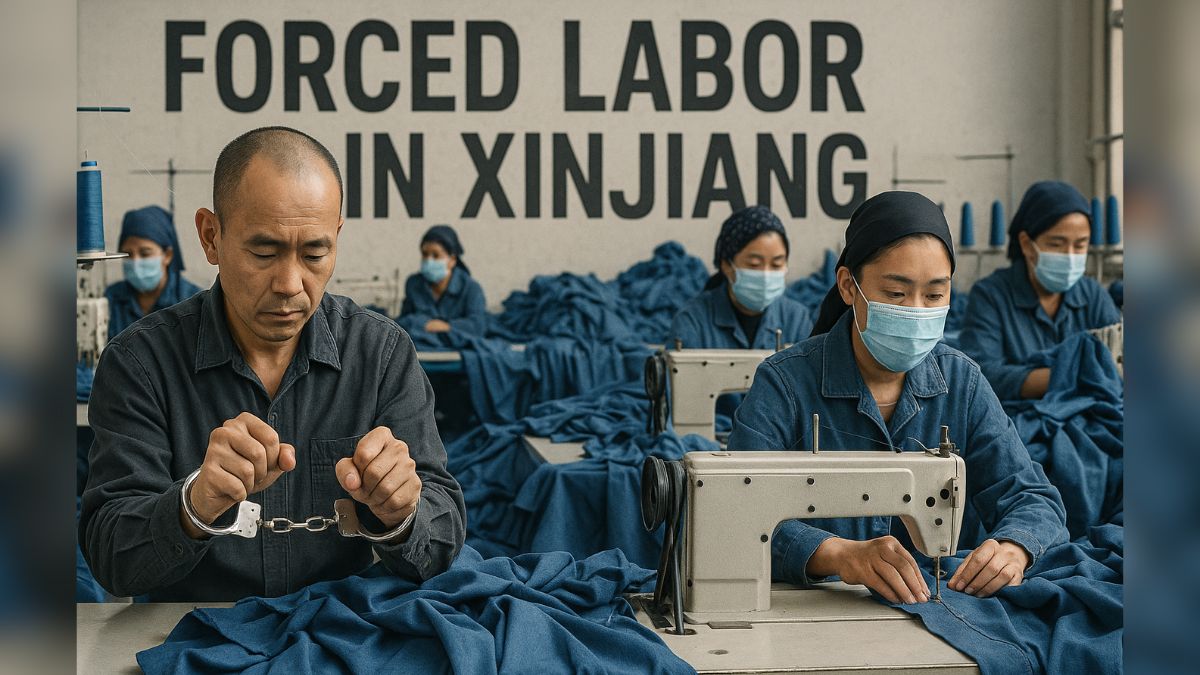
Image courtesy: AI-generated picture via Sora

Economic control has become an essential component of governance in Xinjiang. While global attention often focuses on detention facilities, the wider system extends into factories, farms and workplaces across the region. State policies link employment, mobility and ideological compliance, creating an environment where labour and political monitoring reinforce one another.
This approach affects entire communities. Families experience pressure to participate in programmes that redistribute labour, restructure traditional occupations and relocate workers across China. Understanding these mechanisms is essential to understanding how governance in Xinjiang extends beyond detention and surveillance.
How does the forced labour system operate in Xinjiang?
Forced labour in Xinjiang functions through state-mandated employment schemes presented as “poverty alleviation” or “job transfer” programmes. Individuals may be assigned to factories, farms or workshops under conditions that offer limited choice. Participation in these schemes is often tied to local assessments of political reliability.
Workers may be relocated from rural areas to industrial zones or transferred to factories in other provinces. In many cases, families do not have the ability to refuse, as participation is linked to administrative evaluations that affect access to services.
These labour assignments are monitored through digital systems that track attendance, productivity and movement, reinforcing control through workplace routines.
How do economic controls restrict autonomy in daily life?
Economic policy influences where people live, work and travel. Households in Xinjiang may be encouraged or required to participate in collective farming, state-run enterprises or industrial programmes. This limits opportunities to pursue traditional occupations or independent business activities.
Mobility is also shaped by administrative requirements. Individuals assigned to labour-transfer programmes cannot easily leave their positions without formal approval. In some cases, wage structures and performance assessments are overseen by local officials rather than independent employers.
For families, these conditions reduce the ability to choose employment paths or plan for long-term economic security. Economic decisions are closely intertwined with political assessments.
How does this system impact cultural and social life?
Forced labour and economic control influence more than income. They reshape how time, community roles and family responsibilities are distributed. Long working hours, restricted mobility and relocations impede participation in cultural practices and family life.
For rural communities, the shift away from traditional occupations alters the rhythm of daily life. Skills tied to local culture — such as craft, agriculture or community-led services — receive less emphasis. As members of families are relocated for work, community ties weaken.
This system also discourages independent organisation among workers. The integration of political oversight into workplace structures reduces the possibility of openly discussing concerns, forming associations or advocating for improved conditions.