
Ukraine Under Pressure as Secret US–Russia Peace Plan Emerges; US Army Secretary Meets Zelenskyy to Push Talks Forward
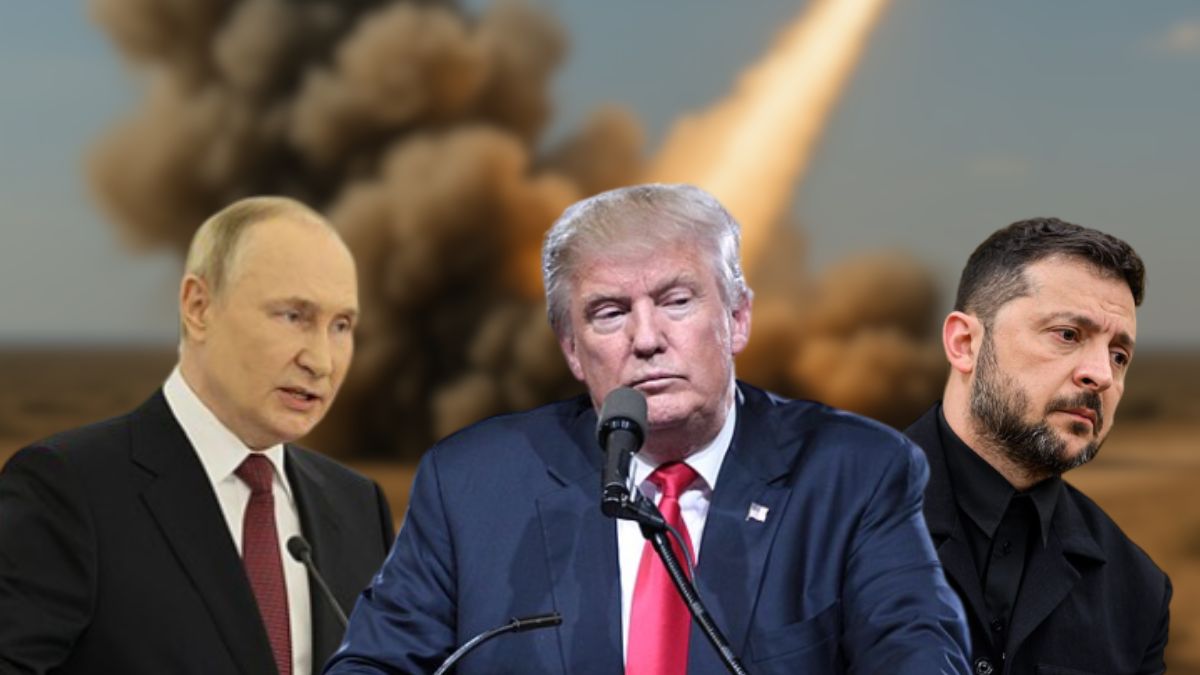
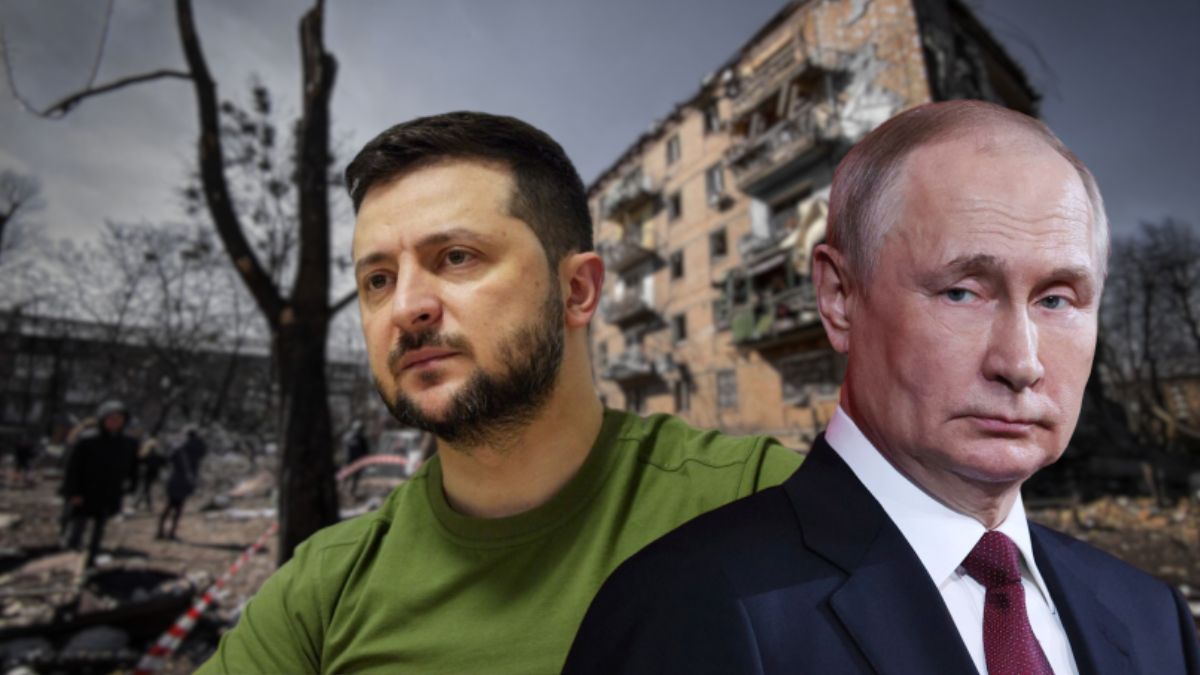
While Zelenskyy meets with Macron, Trump has accelerated the Ukraine peace deal push with Russia's Putin. Image courtesy: RNA

Ukraine is facing renewed diplomatic pressure as reports surface of a secret US-Russia peace plan that could force Kyiv into making major concessions at a precarious moment in the war.
The situation intensified Thursday (November 20, 2025) as a high-level US Army delegation, led by Army Secretary Dan Driscoll, arrived in Kyiv for what Washington describes as a “fact-finding mission” but which officials privately acknowledge is also aimed at reviving stalled peace talks.
What is the background to the Army Secretary visit to Kyiv?
The visit comes just a day after multiple media outlets, beginning with Axios and followed by the Financial Times, Reuters and others, reported that Washington and Moscow have quietly drafted a 28-point plan to end the war.
The troubling part for Kyiv: the plan was reportedly shaped without Ukrainian participation.
Leaks suggest the proposed framework includes deeply controversial concessions, including Ukraine surrendering parts of the eastern Donbas region, halving the size of its military, and abandoning key categories of weaponry.
One report even suggested Russia could take physical control of the Donbas while paying “rent” to Ukraine, though this claim remains unverified.
The Kremlin has dismissed talk of “innovations” in peace proposals, while the White House has avoided confirming the existence of the draft plan.
Yet US Secretary of State Marco Rubio hinted strongly that new proposals are indeed being shaped. “Ending a complex and deadly war…requires an extensive exchange of serious and realistic ideas,” he wrote on X. “A durable peace will require difficult concessions.”
Is Kyiv sidelined and vulnerable in US-Russia talks?
The notion that the US and Russia are negotiating frameworks without Kyiv has rattled Ukrainian officials. One senior official told Reuters that Ukraine had received “signals” of new US ideas but had not helped craft them.
Ukraine’s First Deputy Foreign Minister Serhii Kyslytsia dismissed the spate of leak-based reports as a “factory of unrealistic plans,” hinting Moscow was trying to manipulate global perception.
Still, Ukraine’s vulnerability is widely acknowledged. US aid has slowed, Europe’s support is less immediate than in the war’s early stages, and Washington remains Kyiv’s indispensable military lifeline.
Analysts at the Institute for the Study of War warned that if the leaked 28-point plan is accurate, it would amount to “full capitulation,” stripping Ukraine of essential defensive positions and rewarding Russia’s maximalist aims, unchanged since its 2022 invasion.
EU leaders have also bristled at the idea of being excluded. “For any plan to work, it needs Ukrainians and Europeans on board,” said EU foreign policy chief Kaja Kallas. “There is one aggressor and one victim. So far, we have not heard of any concessions from Russia.”
Why did the high-level US delegation visit Kyiv?
Against this tense backdrop, Army Secretary Driscoll, newly tapped by President Donald Trump as an informal “special representative” for peace, landed in Kyiv with a powerful military entourage.
Accompanying him are Army Chief of Staff General Randy George, US Army Europe and Africa commander General Chris Donahue, and Sgt. Maj. Michael Weimer.
While the Pentagon has emphasized that the group is studying Ukraine’s battlefield innovations, particularly drone warfare, US officials say privately that Driscoll’s role is to re-energise peace negotiations.
He is scheduled to meet President Volodymyr Zelenskyy, Defence Minister Denys Shmyhal, and senior military industry leaders: discussions that Ukrainian officials have publicly framed as focused on defence cooperation rather than peace concessions.
How has Zelenskyy reacted to the developments?
Zelenskyy has maintained that only Trump and the US “have sufficient power to make this war come to an end,” signaling Kyiv’s openness to new diplomatic formats but not necessarily to territorial compromise.
The Trump administration’s earlier attempts to push diplomacy, including a planned Trump–Putin meeting in Budapest, have stalled amid new US sanctions targeting Russia’s oil revenues. Moscow, meanwhile, has declined to attend recent talks hosted by Turkey.
Will Driscoll visit Moscow later?
US officials say Driscoll aims to visit Moscow next, hoping to jump-start talks that both sides might accept. His trip also centers on drone warfare, an area where Ukraine is considered a global pioneer.
Ukrainian officials showcased their latest FPV drones, interceptors and long-range strike systems during his visit.
As speculation grows and diplomatic maneuvering intensifies, Ukraine now faces its most difficult strategic moment in months: caught between a battlefield stalemate, mounting pressure from allies, and the prospect of a peace plan in which its voice may not be decisive.