



ISRO Lines Up Seven Launches by March, Including Gaganyaan Test Flight, Breakthrough Propulsion
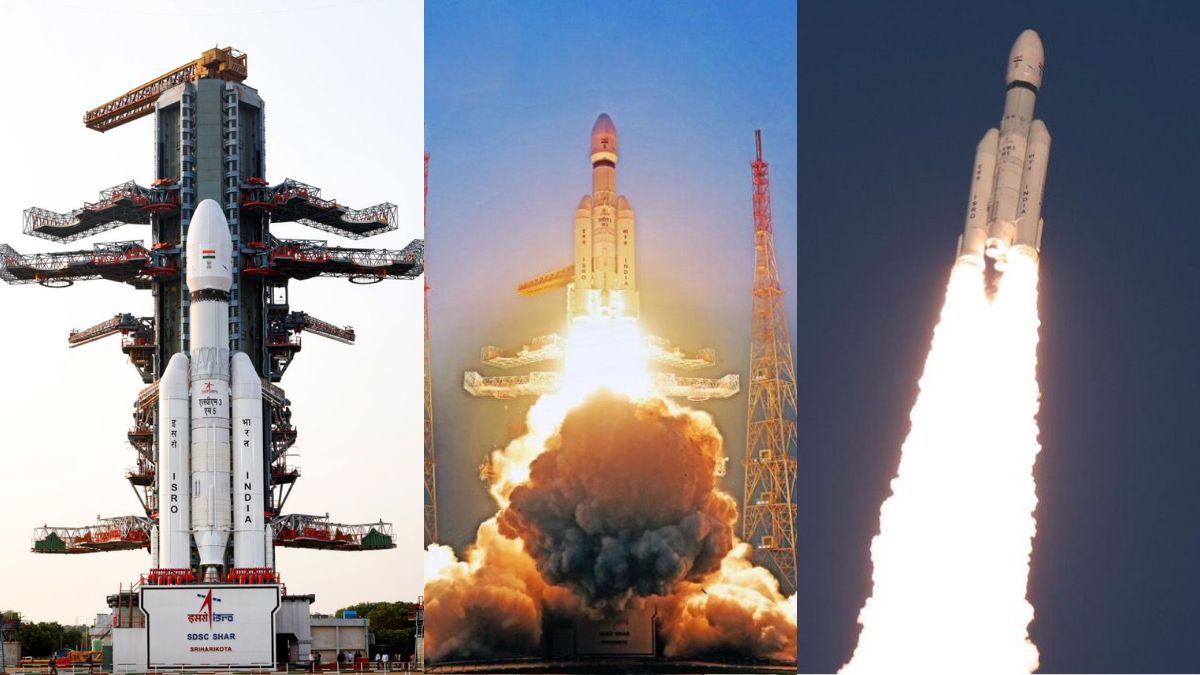
India’s space agency is entering a tightly packed launch phase as heavy lift rockets commercial missions and human spaceflight preparations align under an ambitious launch schedule through March. Image courtesy: X.com/@isro

The Indian Space Research Organisation (ISRO) is preparing for one of its busiest launch phases in recent years, with seven missions scheduled by March next year, including the first uncrewed flight of the Gaganyaan human spaceflight programme and a critical technology demonstrator testing indigenous electric propulsion and quantum communication systems.
The packed launch calendar, reported by the Indian media on December 14, 2025, underscores India’s dual focus on strategic capabilities and commercial expansion in the global space market.
How LVM3 could be the workhorse of the ISRO missions?
The first mission in this series could lift off as early as next week, signalling a tightly sequenced schedule that will keep multiple launch vehicles in action across different mission categories. At the centre of this plan is the LVM3, India’s heaviest rocket, which will undertake both commercial and national priority missions.
Under a commercial agreement managed by New Space India Limited (NSIL), the LVM3 will launch the Bluebird-6 communication satellite for US-based AST SpaceMobile.
Union Minister of State for Space Jitendra Singh told Parliament that the mission reflects ISRO’s growing role as a reliable launch service provider, even for heavy satellites, at a time when global demand for launch slots remains high.
What are the plans for human spaceflight?
The same rocket will also anchor India’s human spaceflight ambitions. Early next year, the human-rated LVM3 will carry the first uncrewed Gaganyaan mission, featuring the humanoid robot Vyommitra aboard the crew module. This flight will test the complete human spaceflight sequence, from lift-off and orbital operations to atmospheric re-entry and safe recovery at sea.
According to Singh, the mission will validate aerodynamic performance, onboard systems, mission operations, and recovery procedures. A second uncrewed Gaganyaan flight is planned later in 2026, paving the way for India’s target of sending astronauts into low Earth orbit by 2027.
How will India’s private industry join the space missions?
Alongside Gaganyaan, ISRO’s launch manifest highlights a decisive push towards greater industry participation. Next year will mark the launch of India’s first industry-built Polar Satellite Launch Vehicle (PSLV).
The rocket will place the Oceansat satellite into orbit and also carry the India-Mauritius Joint Satellite and the LEAP-2 satellite developed by Bengaluru-based startup Dhruva Space.
How has technology transfer helped the private sector?
This milestone follows a technology transfer agreement signed in September, under which NSIL awarded a contract to a consortium led by Hindustan Aeronautics Limited (HAL) and Larsen & Toubro to manufacture five PSLV rockets.
The move is aimed at boosting launch frequency, strengthening the private space ecosystem, and easing pressure on ISRO’s internal production facilities.
Why will ISRO continue to rely on its own PSLVs?
ISRO will, however, continue to deploy its own PSLVs for sensitive and strategic missions. One such launch will carry the EOS-N1 earth observation satellite for a strategic user, along with 18 smaller satellites from Indian and international customers.
Another mission using the GSLV Mk II will place EOS-5, also known as GISAT-1A, into orbit, replacing GISAT-1, which failed to reach its intended orbit in 2021.
A major technological highlight in the upcoming schedule is the PSLV-C63 mission carrying the Technology Demonstration Satellite-01 (TDS-01). This mission will test a high-thrust electric propulsion system, quantum key distribution technology, and an indigenous travelling wave tube amplifier.
What is the electric propulsion test for?
The electric propulsion test is particularly significant for ISRO’s future satellite architecture. Once operational, it will enable fully electric satellites that require far less fuel.
ISRO officials note that while a conventional four-tonne communication satellite carries over two tonnes of liquid fuel, an electric propulsion-based satellite would need only about 200 kg, cutting total mass to under two tonnes without sacrificing performance. This shift could dramatically reduce launch costs and increase mission flexibility.
What are the other space technologies to be validated?
The TDS-01 mission will also validate indigenous travelling wave tube amplifiers, a core component of satellite transponders, strengthening India’s self-reliance in critical communication technologies with both civilian and strategic applications.
Rounding out the launch lineup is the Small Satellite Launch Vehicle (SSLV), with ISRO planning a dedicated satellite mission before March 2026.
The SSLV is designed to provide a responsive and cost-effective launch option for small payloads, further expanding India’s commercial launch portfolio as ISRO enters a high-tempo phase of operations.