

Mother Of All Deals: Why India-EU Trade Deal Is Being Called So; Numbers Speak Louder Than Words
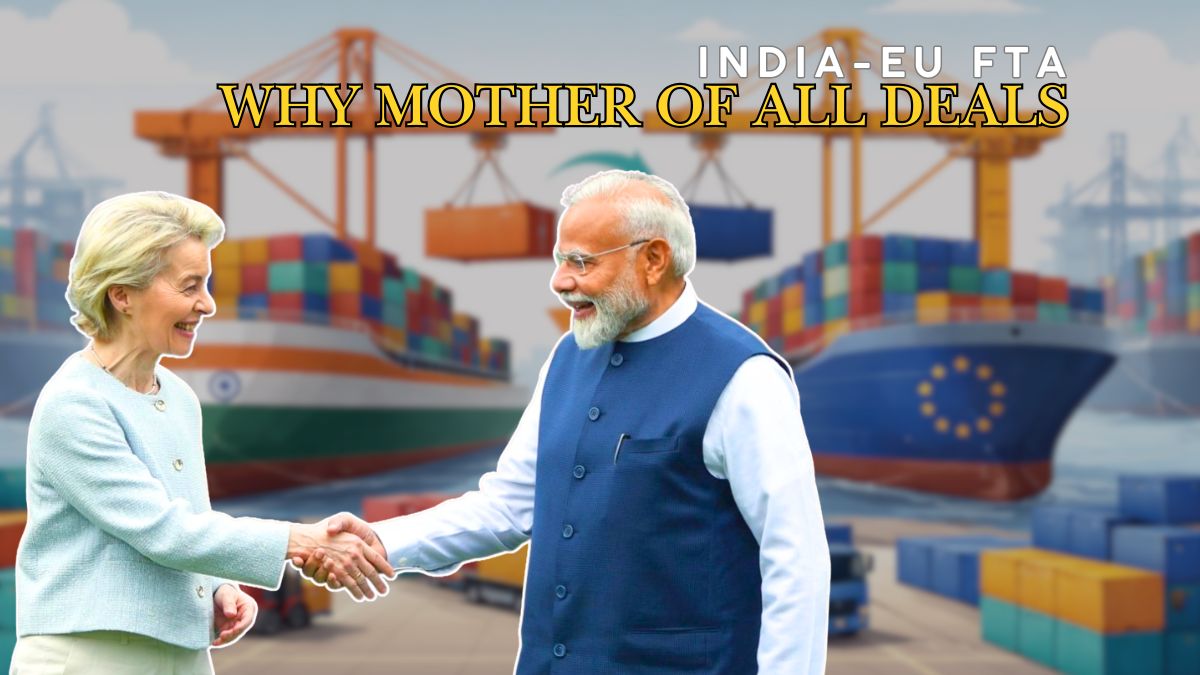
Both India and the EU already share a strong commercial relationship, with bilateral trade valued at $135 billion in FY24. Image courtesy: RNA

Even as India continues to struggle to bring the much-awaited trade deal with the United States to life, it certainly is “on the cusp of a historic trade agreement” with the European Union. And this is not something we are claiming out of nowhere, but European Commission President Ursula von der Leyen herself saying so.
Could we see India and the EU entering into a trade deal as early as this month? It could be so, as Leyen will be visiting India for a two-day visit next week. While officially invited as one of the Chief Guests for he Republic Day Parade 2026, she, along with European Council President Antonio Luís Santos da Costa, will also co-chair the 16th India-EU Summit on 27 January 2026.
The EU chief has now given clear indicated that a trade with pact with India will be signed soon. Addressing global leaders at the World Economic Forum (WEF) in Davos on Tuesday (January 20, 2025), Leyen stated that India and the EU are “on the cusp of a historic trade agreement” that could reshape global commerce and supply chains.
India-EU trade deal coming soon?
Leyen framed the prospective India-EU free trade agreement as part of Europe’s broader strategy to champion what she described as “fair trade over tariffs, partnership over isolation, sustainability over exploitation.” With this, she underlined that the European Union was committed to de-risking its economy and diversifying supply chains.
But how is the trade the coming, because the wait has been too long? “And right after Davos, the next weekend, I will travel to India. There is still work to do, but we are on the cusp of a historic trade agreement,” Leyen shared, noting that “some call it the mother of all deals.”
India-EU trade deal: Why it is being called ‘mother of all deals’
The partnership between India and the EU is not new, but one that dates back over two decades. They have been strategic partners since 2004, but the India-EU ties took on a new urgency and depth in recent years, particularly following the visit of the EU College of Commissioners to India in February 2025.
India-EU trade agreement, if concluded, would be among the biggest and most ambitious trade deals in the world. Bringing two major economies of the world together, it would cover tariffs, investment, digital trade, services, among other things. Perhaps one of the biggest gains for New Delhi would be a deeper access to one of its largest trading partners, especially when ties with the US do not seem too great.
EU chief Leyen, in her statement underlined that the India-EU FTA would create a combined market of around 2 billion people and account for nearly a quarter of global GDP.

A deep dive inside possible ‘mother of all deals’
One of the most striking thing concerning the highly anticipated India-EU trade deal is the timing. As many countries eye a redrawing of their supply chains, India stands poised to claim a far larger slice of the massive opportunity, if the long-awaited free trade agreement finally comes through.
If all goes according to plan, the India–European Union Free Trade Agreement would become India’s 19th free trade agreement, but far more importantly, it would be its most ambitious and strategically significant yet, given the EU’s economic weight and regulatory influence.
Since 2021, India has been on an aggressive trade push, signing FTAs with the UAE, Australia, New Zealand, the EFTA bloc and the UK. While each of these agreements expanded India’s market access, the EU deal operates on a different scale altogether. Unlike bilateral agreements with individual countries, the India–EU FTA covers a 27-nation customs union.
Commerce Minister Piyush Goyal too last week described the India–EU FTA as the “mother of all deals”, and the numbers explain why.
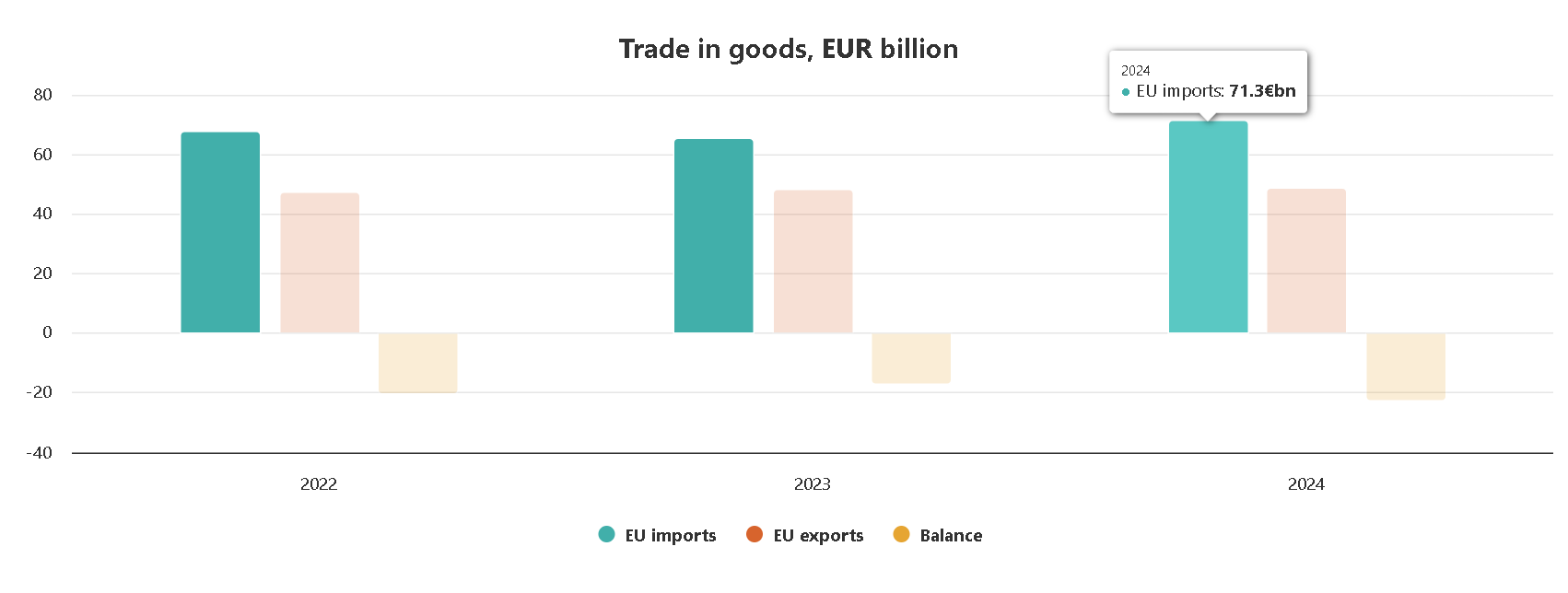
Together, India and the EU would form a market of nearly two billion people, accounting for around 25% of global GDP. No other trade agreement currently under negotiation matches this size or economic depth. India’s trade relationship with the EU is already substantial. In 2024–25, bilateral trade stood at $136.53 billion, with India exporting $75.85 billion and importing $60.68 billion worth of goods.
The EU accounts for about 17% of India’s total exports, while India makes up roughly 9% of the EU’s overseas trade. The FTA aims to significantly deepen these numbers by reducing tariffs and non-tariff barriers.

Why India-EU FTA could be a game changer: What’s in it for India?
For New Delhi, the biggest immediate gains lie in labour-intensive sectors. While average EU tariffs are relatively low at around 3.8%, products such as textiles and garments still face duties of about 10%. Eliminating these would provide a lifeline to sectors under global pressure and support millions of jobs.
High-value industries such as pharmaceuticals and chemicals stand to benefit from smoother regulatory approvals and aligned standards, enabling easier access for generics, specialty drugs and chemical products. The deal also helps India diversify trade at a critical time, especially as the US has imposed steep tariffs.
What the EU gains from trade deal with India?
There’s no secret that India is now the fastest growing major world economy, and on its way to becoming the third largest in the world in the coming years. For Europe, the attraction is India’s rapidly expanding consumer base, coupled with the rapidly growing economy. The FTA could dramatically lower India’s steep import duties on wines, spirits and alcoholic beverages, which currently range between 150 and 200%.
European premium carmakers, industrial machinery manufacturers, electrical equipment producers and chemical exporters are also expected to gain from reduced tariffs and simplified regulations.
The agreement goes well beyond merchandise trade. High-value services sectors, including IT, engineering, business services and telecom, are expected to gain from improved market access and recognition of qualifications.
Specialised and niche sectors such as aircraft components, diamonds and luxury goods could also unlock new opportunities as India integrates more deeply into European supply chains.
India-EU trade deal, FTA: Numbers to note
- EU among the world’s richest markets, with 450 million consumers and an economy valued between €18 trillion and €22 trillion.
- EU imports approx $125 billion of textiles & apparels, of which India has a 5-6% share while China has the largest share at 30%.
- Trade in goods between the EU and India has increased by almost 90% in the last decade.
- Trade in services amounted to €59.7 billion in 2023 (with EU exports of €26 billion).
- EU’s imports from India comprise mainly machinery and appliances, chemicals, base metals, mineral products, and textiles.
- EU’s main exports to India consist of machinery and appliances, transport equipment, and chemicals.
- EU’s share of foreign direct investment (FDI) stock in India reached €140.1 billion in 2023, up from €82.3 billion in 2019.
- Some 6,000 European companies are present in India, generating 8 million jobs.
Why this FTA is strategically significant
Prime Minister Narendra Modi had in September 2025 stated, “As the world’s largest democratic forces, India and EU share a strong and close relationship built on trust, shared values, and a common vision for the future.” He framed the partnership as one where both nations can jointly address global issues, foster stability, and promote a rules-based order.
The India-EU FTA could increase the bilateral trade by 20-30% through reduced tariffs and non-tariff barriers, while also serving a bigger geopolitical purpose by fostering a deeper collaboration between India and the EU.
At its core, the India–EU FTA is about more than trade. It reflects a shared effort to de-risk supply chains, reduce overdependence on any single geography, and build resilient economic partnerships in a fragmented global order. If concluded as expected, the deal will not just reshape India–EU commerce but also redefine India’s place in global trade architecture.