
Beijing’s Deep Global Financial Footprint: Over 80% Of The World’s Nations Borrowed From China
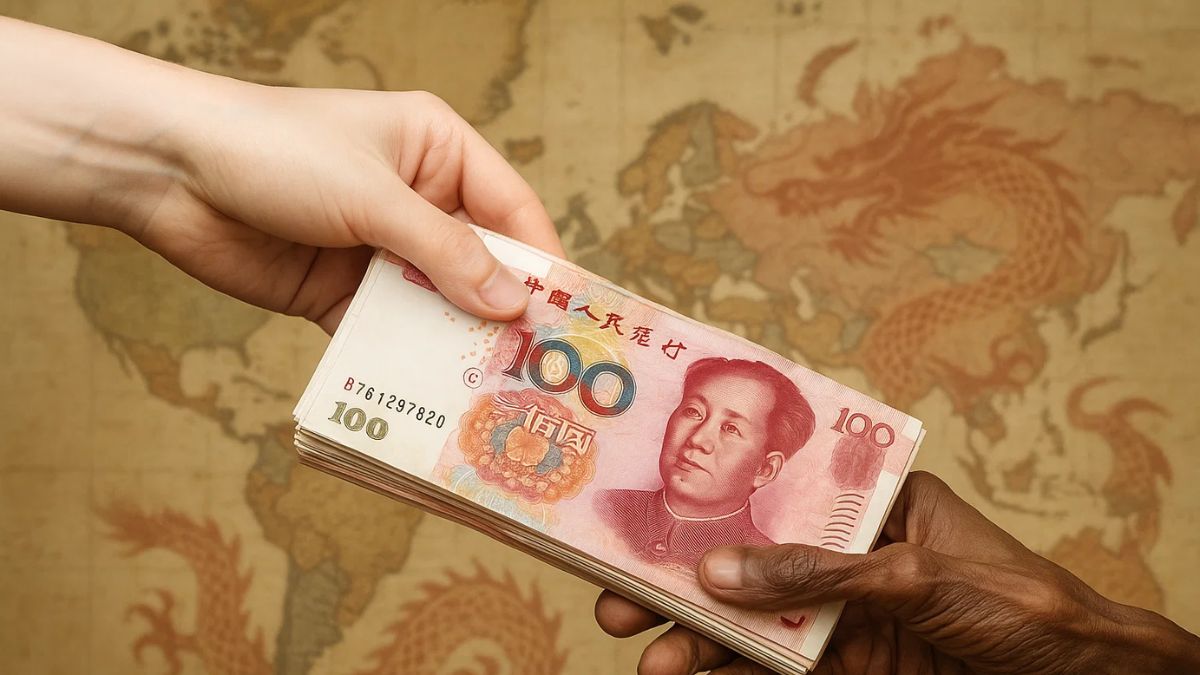
Between 2000-2023, Beijing extended more than $2 trillion through its state-owned banks and institutions. Image courtesy: AI-generated picture via Sora

Over 80% of countries and regions worldwide obtained loans or grants from China between 2000 and 2023, a sweeping new analysis from AidData, as reported on November 28, 2025, said.
During this period, Beijing extended more than $2 trillion through its state-owned banks and institutions, reflecting a dramatic expansion of Chinese credit beyond traditional developing countries.
Which nation is the single largest recipient of loans from China?
Notably, the largest single recipient turned out to be the United States, receiving over $200 billion, followed by Russia and Australia.
This marks a significant shift: Chinese lending is no longer solely targeted toward low-income or infrastructure-hungry regions.
Instead, a growing share of financing, including commercial loans, is flowing into high-income nations, signalling Beijing’s evolving financial strategy that blends geopolitical ambitions with commercial interests.
How is China’s debt diplomacy strangling nations?
For many developing countries, especially those that once welcomed Chinese infrastructure funding under the Belt and Road Initiative (BRI), this trend is a double-edged sword.
On one hand, China provided much-needed capital for roads, ports, and power projects when Western lenders were often reluctant. On the other hand, critics warn that mounting debt, often under opaque terms, may burden fragile economies.
According to experts, debt-servicing costs are beginning to strain public budgets in poorer nations, jeopardising funding for social sectors such as healthcare and education.
The report’s findings also shed light on China’s recalibrated lending posture. The share of new loans under BRI, which once dominated Chinese overseas finance, has dropped to about 25 percent.
This suggests that Beijing is more cautiously embracing commercial-credit models over concessional aid, especially in dealing with wealthier or more stable economies.
What does this mean for India?
For countries like India, which, according to the same analysis, borrowed about $11.1 billion from China for energy and financial-sector projects, this trend has strategic implications.
As China increasingly finances globally, New Delhi and other nations may face tougher competition for influence, investment, and debt-service obligations.
In sum, the new data from AidData portrays China not just as a lender to poor countries, but as a global financial powerhouse whose loans now extend across continents and income levels.
As repayment deadlines grow nearer for many, the world may soon see whether this expansive Chinese lending becomes a liability, or a lever of influence.