

How Chinese Weapons Failed Again in Iran, After Venezuela and India’s Operation Sindoor
Chinese Weapons Fail Again

China has, in recent years, tried to build an impression that its weapons and military systems are cheaper but more effective than Western defence equipment.
But recent conflicts around the world have exposed the hollow claims of China regarding its military systems like never before.
The latest failure of Chinese weapons and military equipment imported by Iran is the most glaring example of the misrepresentation by Beijing.
During last week’s US-Israel air strikes on Iran, Chinese defence systems failed miserably to help Tehran to defend itself and proved ineffective against Western military equipment.
This comes within a year of Chinese equipment fielded by Pakistan failing during India’s May 2025 Operation Sindoor and the US military operations in Venezuela to arrest Nicolas Maduro and his wife.
The equipment that China touted as “battle-tested innovation” has now proved to be inept and shoddy.
In Iran, the Chinese-origin HQ-9B air defence systems crumbled against F-35 stealth barrages, and the US-Israel air strikes at key locations inside the capital Tehran, which killed Supreme Leader Ayatollah Ali Khamenei and the top political and military leadership, including the Revolutionary Guards Corps commanders.
How India busted the Chinese Weapons of Pakistan
In response to the April 22, 2025, Pahalgam terror attack that claimed 28 lives, India launched Operation Sindoor on May 7 that year.
Pakistan, a Chinese-supply-dependent military, looked helpless against India’s BrahMos cruise missiles that struck Islamabad’s military installations and reduced them to rubble.
The Indian fielded weapons proved the Chinese-origin YLC-8E so-called anti-stealth radars as a useless piece of junk, and so did the HQ-9 air defence batteries that Pakistan deployed against Indian attacks.
The Indian Air Force (IAF) executed precision, stealth bombings on nine terror camps inside Pakistan and Pakistan-occupied Kashmir, destroying these military training installations completely, including the Islamabad-sponsored terror outfits JeM and LeT headquarters.
The IAF also hit 11 Pakistani air bases and military command centres on May 9 using BrahMos missiles and other air-to-ground weapons without crossing the Line of Control between the two nations.
The operations on May 9 highlighted the Suppression of Enemy Air Defences (SEAD) capabilities, bypassing Pakistan’s China-origin air defence systems and radars.
The YLC-8E radar deployed at Chunian air base in Lahore, claimed to have a 450-km range, failed humiliatingly against the Indian ELM-2090U Green Pine radars and Growler-like Electronic Warfare system’s jamming.
Lahore’s HQ-9 surface-to-air missile, claimed to be modelled on Russia’s S-300 system, failed to engage IAF’s combat jets or the missiles they fired, completely crippled by the Indian jammers.
Even the China-made Wing Loong-II MALE UAVs armed with AR-1 laser-guided missiles failed to evade India’s counter-UAV systems, led by India’s Akash-NG and MRSAM.
India also recovered an intact PL-15E air-to-air missile, the export variant of China’s PL-15, fired by Pakistan Air Force’s AF JF-17s that missed their target totally.
How US Operations in Venezuela Exposed China’s Defence Systems
In Venezuela, the China-supplied JY-27A radars and HQ-9s were blindsided by the US Delta Force that extracted Maduro and his wife with impunity in early January 2026.
The US had launched ‘Operation Absolute Resolve’ to capture Maduro and his wife in a daring midnight raid inside Caracas, snatching the then-President and his spouse without even a whimper from the Chinese-made military equipment.
US Delta Force, inserted by the stealth MH-60M Black Hawk helicopters, extracted the target amid a labyrinth of Chinese and Russian defences. This US operation exposed Beijing’s arsenal as nothing but exhibition models that packed no punch.
The Chinese hype and incompetence burned the $2-billion Venezuelan investment in Beijing-supplied weapons and defence systems in 2019.
The so-called backbone of Venezuelan air defence comprised Chinese JY-27A ‘meter-wave’ anti-stealth radars. The AESA radars, meant to sight, track and shoot down the American F-22 and F-35 stealth combat jets, stood blind to the American insertion of the Delta Force.
The American EA-18G Growler’s electronic warfare jammed the Chinese air defence systems, disabling them and reducing them to duds. The Chinese-origin HQ-9 SAMs and shorter-range HQ-12s stayed mute throughout the American Delta Force operations.
How Trump Poked China Before the Air Strikes that Killed Khamenei
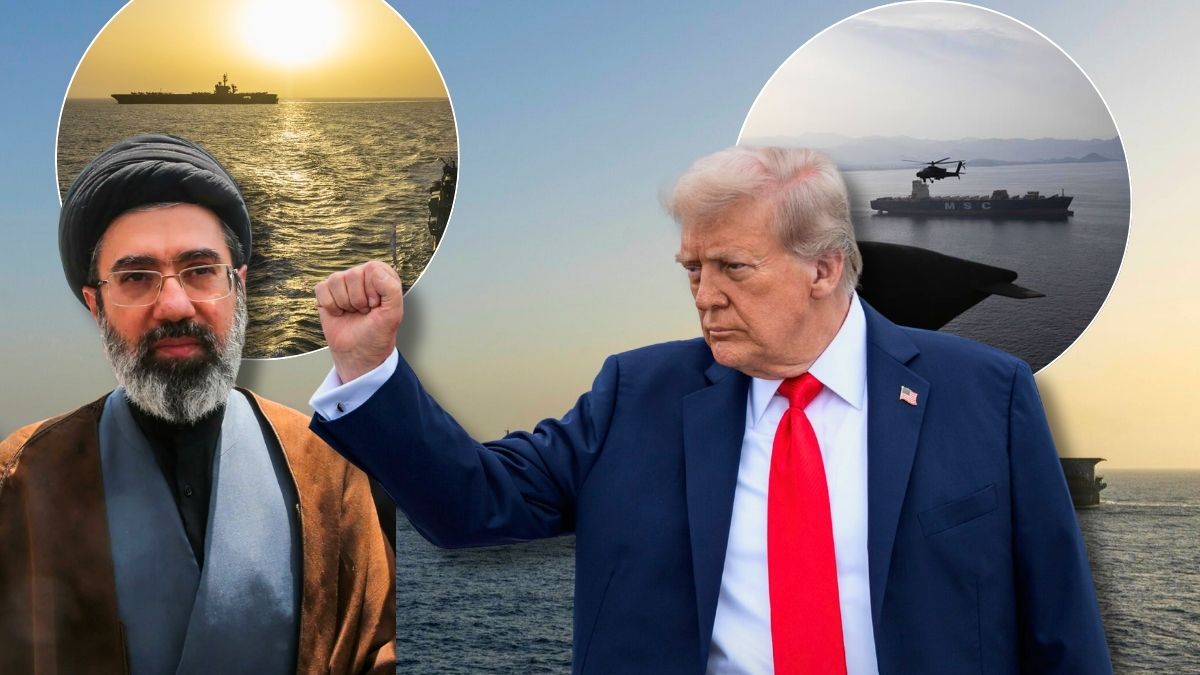
In his 2026 ‘State of the Union’ address, historic for its length, US President Donald Trump took a swipe at his nation’s adversaries, without naming China or Russia, for their reliance on foreign military technologies.
Mentioning the Venezuela operations, Trump said there was a “major military installation protected by thousands of soldiers and guarded by Russian and Chinese military technologies,” questioning, “How did that go for them?”
Trump delivered that address just before he joined Israeli Prime Minister Benjamin Netanyahu in hitting Iran and killing its Supreme Leader Khamenei. The remarks were a clear indication of how things would unfold for Iran later.
The US President’s comments were not just rhetoric but proved prophetic regarding the weakness of the Chinese weapons and military systems supplied worldwide, boosting the American-Israeli confidence in easily penetrating the Iranian air defence later.
Iran’s Chinese-origin HQ-9B, acquired in 2025 as a Russian S-300 clone, the surface-to-air missile system flopped against American-Israeli combat jets and precision guided munitions.
Even the Chinese HQ-9B, touted as a Russian S-400 remake, exposed its flaws, though it claimed to have a 260-km engagement range.
These three conflicts in the last 10 months and the performance, or the lack of it, of Chinese-made weapons, radars, and air defence systems, are a clear indication of the fake claims of superiority of China’s military industrial base.
It also signalled to the world and the potential customers that China’s military capabilities are rotten from the inside and Beijing only hoodwinked its existing military buyers with substandard defence suppliers that folded when the time came for their performance