
India-Canada Security Reset Gains Momentum As Doval-Drouin Action Plan Unveiled Ahead Of PM Carney’s India Visit
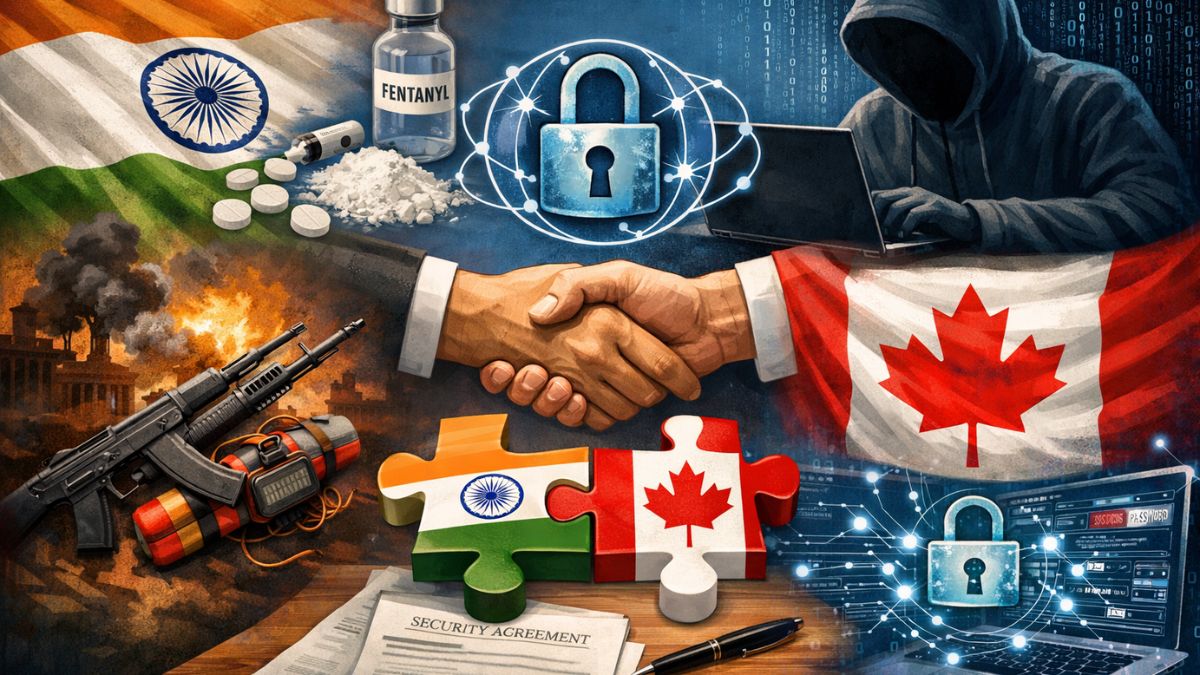
Recent discussions between the two countries' NSAs marked a significant step forward in strengthening bilateral security ties. Image courtesy: AI-generated picture via Sora

Leaving all the bitterness and strain behind, India and Canada appear to be turning a new page in their relationship, with both sides agreeing on a structured security cooperation framework aimed at tackling shared threats. These range from fentanyl smuggling and organised crime to cybercrime and immigration fraud.
Adding further momentum to the relations would be Canadiam Prime Minister Mike Carney’s visit to India in a few days. Ahead of his visit, the recently agreed security arrangement has been dubbed as a “wonderful action plan” that addresses “all the issues” between the two countries, by Indian High Commissioner to Canada Dinesh Patnaik.
He stated that the security cooperation signals a potential reset in bilateral ties. The development comes just days ahead of Carney’s scheduled visit to India on February 26, where he is expected to meet Prime Minister Narendra Modi to expand cooperation across multiple sectors.
What has changed in India-Canada security cooperation?
The breakthrough follows high-level talks between India’s National Security Advisor Ajit Doval and his Canadian counterpart Nathalie Drouin, along with Canada’s Minister for Public Safety Gary Anandasangaree. According to India’s Ministry of External Affairs, both countries agreed to establish security and law-enforcement liaison officers.
With this, India and Canada have also agreed to create a shared workplan on national security cooperation, facilitate timely information sharing on transnational crime, formalise cooperation on cybersecurity policy and cyber threat intelligence, continue collaboration on immigration enforcement and fraud.
Patnaik said the mechanism would enable real-time communication and practical coordination. “If we have to make Canada safe and India safe, we need to discuss and talk about all the issues, have liaison officers with each other, and have cooperation which is on time and online,” he said.
Why is this security pact significant?
India-Canada relations have faced turbulence in recent years, particularly over allegations linked to extremist elements operating from Canadian soil and diplomatic tensions that followed. Security concerns, including violent extremism, drug trafficking networks and illegal immigration fraud, have strained trust between the two sides.
The new framework signals mutual recognition that cooperation, rather than confrontation, is essential to address shared vulnerabilities. Among the key focus areas illegal flow of fentanyl precursors, transnational organised criminal networks, cybercrime and cybersecurity threats, violent extremism, immigration-related fraud.
By institutionalising liaison officers, both countries aim to streamline communications and reduce diplomatic friction over sensitive issues.
How does this fit into India-Canada bilateral relations?
Beyond security, India and Canada are seeking to revive a multi-dimensional partnership grounded in economic complementarities. High Commissioner Patnaik described the two nations as “complementary economies.”
Canada possesses vast reserves of energy resources, agricultural commodities, fertilisers, critical minerals. For India, which is actively seeking to diversify supply chains and reduce dependence on traditional sources, Canada’s resource base is strategically significant.
“A deal with Canada would help us very much in diversifying our supply chain away from the traditional sources,” Patnaik said.
Canadian PM Mike Carney India visit: What to expect?
PM Carney’s visit to India on February 26 is expected to inject fresh political momentum into the relationship. The agenda is likely to span defence cooperation, aerospace and space collaboration, energy partnerships, critical minerals supply chains, innovation and artificial intelligence, education and cultural ties.
Patnaik indicated that the visit would showcase the full breadth of the partnership, describing it as “multi-dimensional.”
Is this a diplomatic reset in India-Canada ties?
While challenges remain, the security cooperation framework suggests both sides are attempting to stabilise ties through structured engagement. For India, addressing security concerns linked to diaspora-related extremism has been a consistent priority. For Canada, tackling organised crime, fentanyl trafficking and cybersecurity threats requires global coordination.
The Doval-Drouin action plan may not resolve all historical frictions overnight, but it represents a pragmatic step toward rebuilding institutional trust.