


Bangladesh Now ‘Non-Family’ Posting; India Withdraws Families Of Diplomats From Country Amid Security Concerns
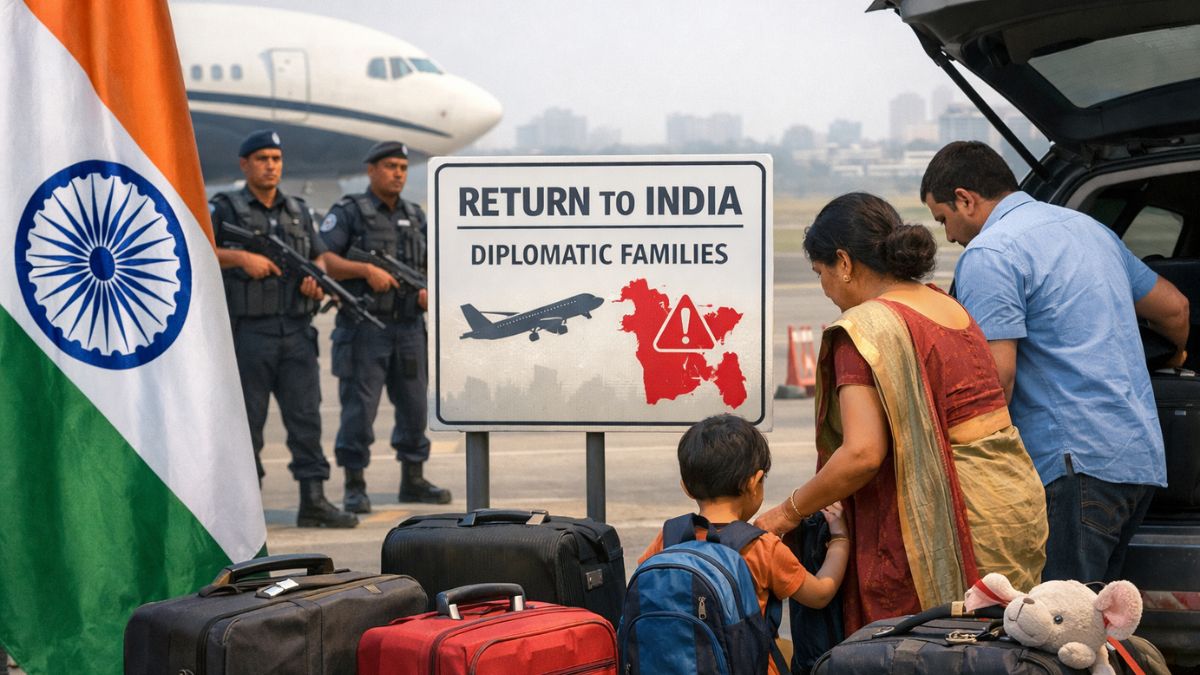
New Delhi has asked the dependents of diplomatic officials stationed in Bangladesh to return to India. Image courtesy: AI-generated picture via Sora

India has decided to withdraw the families and dependents of its diplomats and officials posted in Bangladesh, citing security concerns in the neighbouring country. The move comes weeks ahead of Bangladesh’s parliamentary elections and a national referendum scheduled for February 12, against the backdrop of deteriorating India–Bangladesh relations and a volatile internal security environment.
The decision was taken as a “precautionary measure” in view of the prevailing security situation. While family members have been advised to return to India, Indian diplomats stressed that the High Commission in Dhaka and all other Indian missions in Bangladesh continue to function at full operational strength.
New Delhi has underlined that the step does not amount to a scaling down of its diplomatic presence.##
Does this signal a diplomatic drawdown?
Certainly not. For now, the dependents of diplomatic officials stationed in the crisis-hit country have been asked to return to India, although all five Indian missions in the country will continue to remain open and fully operational, according to PTI. India maintains a High Commission in Dhaka and consulates in Chattogram, Khulna, Rajshahi and Sylhet.
However, officials confirmed that Bangladesh has now been designated a “non-family” posting for Indian diplomats and officials, one of the most stringent security classifications used by New Delhi. Such a status is typically reserved for countries or regions assessed as unstable or high-risk.
India–Bangladesh relations: How a decline is shaping the context
The decision to bring back the families of the diplomats comes amid sustained strain in bilateral relations since the interim government led by Muhammad Yunus took charge in 2024 following the collapse of the Sheikh Hasina government. Since then, New Delhi has repeatedly raised concerns over rising extremist activity and attacks on minorities, particularly Hindus, in Bangladesh.
Over the past few weeks, several Hindu men have been killed in the country, thereby escalating the tensions between New Delhi and Dhaka, which already took a hit following the the lynching of garment factory worker Dipu Chandra Das in Mymensingh in December 2025.
Tensions have further spaked following a spate of protests and incidents of violence in recent weeks, prompting both countries to step up security around diplomatic missions. Indian officials have maintained that the safety of personnel and their families remains a priority.
What does ‘non-family’ status mean?
A “non-family” designation restricts diplomats and officials from being accompanied by spouses and children during their posting. Pakistan is currently the only other country in the region with a similar classification for Indian officials, underlining the seriousness of the security assessment applied in Bangladesh’s case.
While such a move does not automatically signal a diplomatic rupture, it is widely seen as a strong indicator of heightened concern and reduced confidence in the host country’s security environment.
With elections approaching in Bangladesh and bilateral relations under strain, India’s decision sheds light on the fragile state of the neighbourhood’s political and security landscape.