

India–Bangladesh Ties Find Stability in Naval Training and Capacity Building

When diplomatic temperatures waver, defence cooperation usually feels the heat first. But in South Asia’s maritime neighbourhood, a quieter strand of diplomacy has demonstrated remarkable staying power. Through its long-running ITEC programme, India has built a network of naval training partnerships that continue to anchor regional stability—even when political climates turn unpredictable. The endurance of this approach was most visible in recent months as naval engagements between India and Bangladesh held firm despite a contentious diplomatic backdrop.
At a time when political rhetoric fluctuated and high-level exchanges stalled, naval cooperation maintained momentum. The reason, officials say, lies in years of systematic capacity-building efforts led by the Indian Navy under the Indian Technical and Economic Cooperation (ITEC) framework. Training programmes create professional linkages strong enough to survive political turbulence.
For nearly a decade, ITEC has offered hundreds of training slots to officers from the Bangladesh Navy. These include specialised courses in hydrography, navigation, marine engineering, communication systems, and legal frameworks related to maritime enforcement. While land-based military exercises were postponed and defence contracts reassessed, the naval training pipeline did not stop.
Official Indian Navy data underscore the depth of sustained engagement between the two countries. In 2023–24, 39 naval training slots were allocated to Bangladesh under the ITEC framework, of which 37 were utilised. The following year, 42 slots were offered, with 34 Bangladeshi officers attending courses in India. Between training years 2016–17 and 2024–25, a total of 491 Bangladeshi personnel underwent training in India under ITEC, reflecting nearly a decade of steady institutional cooperation.
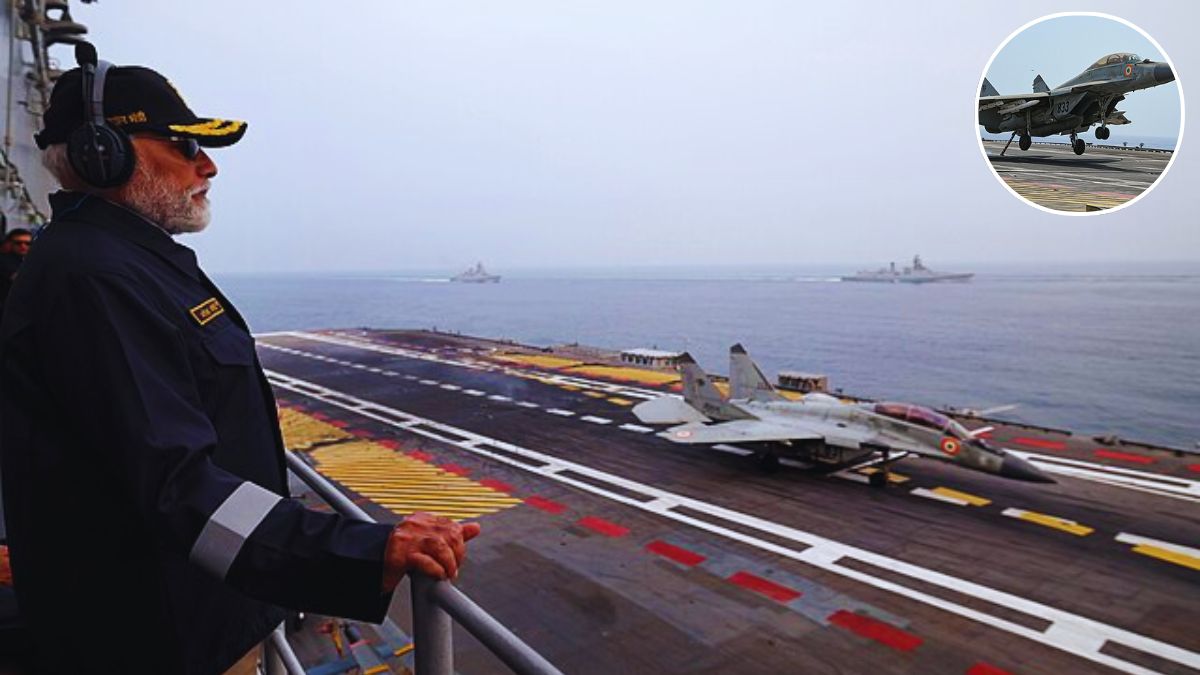
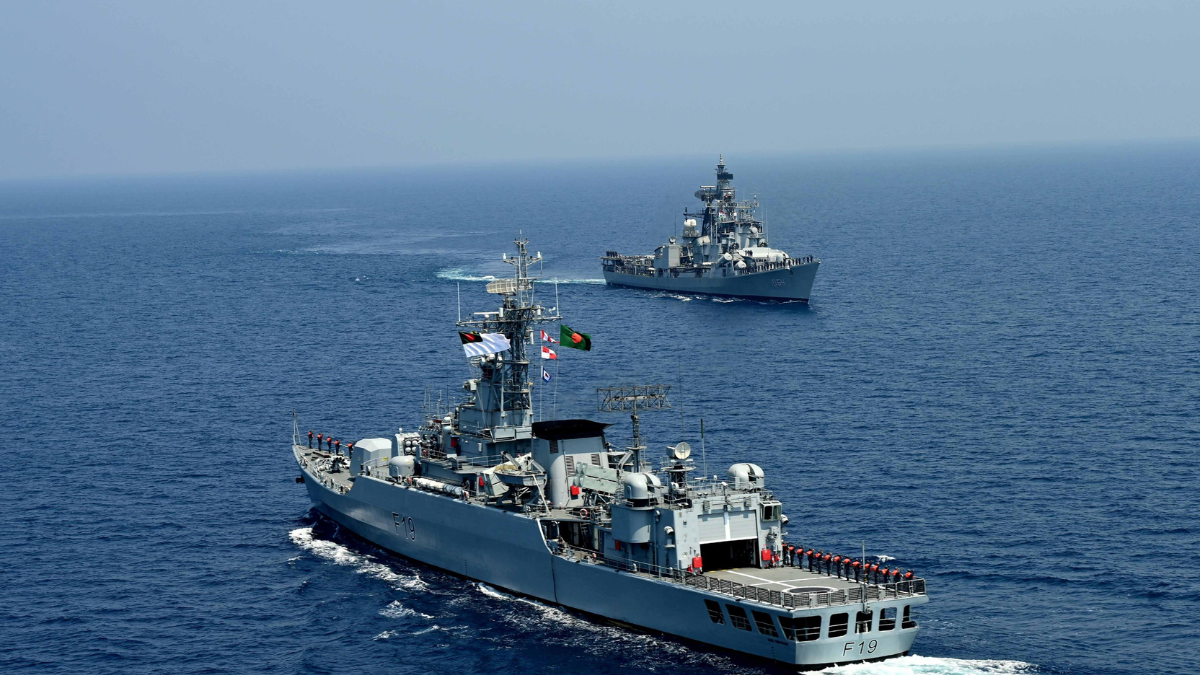
The value of that trust was evident when Exercise Bongosagar 2025 and an India–Bangladesh Coordinated Patrol (CORPAT) proceeded as scheduled. In an atmosphere where both sides were struggling to manage political optics, the sight of Indian and Bangladeshi warships conducting coordinated manoeuvres in the Bay of Bengal sent a quiet but powerful signal.
For India, capacity building is not limited to Bangladesh. Navies across Sri Lanka, Mauritius, the Seychelles, and other Indian Ocean littorals rely on Indian training institutions for officer development. Crucially, this also supports India’s SAGAR (Security and Growth for All in the Region) vision—an approach that emphasises cooperation rather than coercion. As external powers, especially China, increase their naval presence in the Bay of Bengal, India’s focus on training offers a partnership-based approach rather than one built on dependence.
Through ITEC, the Indian Navy’s capacity-building efforts have become a steadying influence in a region facing growing competition and security challenges, providing a form of cooperation that continues even when political ties fluctuate.
With the Bay of Bengal becoming a focal point of great-power competition, New Delhi’s investment in people—rather than platforms—appears to be paying strategic dividends. Through ITEC, India isn’t just training officers; it is shaping a cooperative security architecture for the wider Indian Ocean.
If diplomatic weather patterns remain volatile, the Indian Navy’s training-led diplomacy may be the most reliable compass the region has.